Asking “am I an addict?” usually means a pattern has already changed: using more than you planned, needing it to function, or feeling unable to stop despite real consequences. If you’re asking the question seriously, that alone is worth paying attention to.
If you’ve ever lain awake running through the last few months, counting the mornings you promised yourself “not today” and the nights that ended the same way anyway, you already know this is really about a pattern. Most people picture addiction as something that happens to other people: the person who’s lost the job, the house, the family. Addiction shows up in smaller moments first. The extra drink you didn’t plan on. The pill you took a little early because the day was hard. The quiet math you do in your head about how much is left, and whether you can get more before anyone notices.
Recreate Behavioral Health of Ohio treats this exact question every week, because it’s usually the first one a person asks before they ever pick up the phone. We’re a Joint Commission accredited facility licensed by the Ohio Department of Mental Health and Addiction Services, offering medical detox, residential treatment, and primary mental health care from our campus in Gahanna, just outside Columbus. Our clinicians work with adults who are asking themselves this exact question, often for the first time out loud, and we build treatment plans around the answer, whatever it turns out to be. Recreate Ohio is part of the Recreate Behavioral Health Network, which also operates facilities across Florida, New Jersey, and New York, bringing that broader clinical experience to the people we work with here.
What Qualifies You as an Addict?
Clinically, what qualifies as addiction (or substance use disorder, the term used in diagnosis) is a pattern of using a substance more than you originally intended, feeling a compulsive desire to use it, and continuing despite harm to your health, relationships, or responsibilities. It’s about the pattern over time rather than how much you drink or use on any single occasion.
The Diagnostic and Statistical Manual of Mental Disorders (DSM-5) outlines eleven criteria used to assess substance use disorder, and a person needs only two of them within a 12-month period to meet the clinical threshold. Treatment can start long before rock bottom or losing everything. This is one of the most persistent myths we encounter, and it keeps people out of treatment far longer than they need to stay out.
Clinicians actually look for the following.
- Using more of the substance, or for longer, than you intended
- Wanting to cut back but being unable to
- Spending a significant amount of time obtaining, using, or recovering from the substance
- Experiencing cravings or a strong urge to use
- Failing to meet obligations at work, school, or home because of use
- Continuing use despite relationship problems it’s causing
- Giving up activities you used to enjoy in favor of using
- Using in physically dangerous situations
- Continuing use despite knowing it’s causing physical or psychological harm
- Needing more of the substance to get the same effect (tolerance)
- Experiencing withdrawal symptoms when you stop
Two or three of these suggest a mild disorder, four or five suggest a moderate disorder, and six or more suggest a severe disorder. Even a mild disorder deserves attention, since left untreated, these patterns tend to deepen rather than resolve on their own.
Am I Addicted to Alcohol or Do I Just Drink Too Much?
The line between heavy drinking and alcohol addiction is about control. If you’ve tried to cut back and couldn’t, if your drinking has caused problems you keep repeating anyway, or if you need alcohol to feel normal, that’s addiction.
Plenty of people drink more than they should on occasion, especially during a hard stretch. That’s different from a pattern where the drinking is running the show. Ask yourself a few direct questions. Have you tried to take a break from drinking and found it harder than expected? Do you plan your days around when you’ll be able to drink? Has anyone close to you expressed concern, more than once? Do you drink to manage anxiety, grief, or boredom rather than to enjoy an occasion?
These questions are meant to help you see the pattern clearly, because clarity is usually what’s missing. Alcohol withdrawal can also be medically serious, which is why we always recommend medical evaluation before anyone stops drinking abruptly after prolonged heavy use.
How Do I Know If I Need Detox for Opioids, or Can I Quit on My Own?
Opioid withdrawal is rarely life-threatening on its own, but it’s severe enough that most people cannot complete it without medical support, and attempting to quit alone significantly raises the risk of relapse and overdose. If you’ve used opioids daily for weeks or months, medical detox is the safer and more effective path.
This matters clinically: opioid withdrawal symptoms (nausea, muscle pain, insomnia, intense cravings) typically peak within the first few days and can last a week or more depending on the substance and how long you’ve used it. The discomfort alone drives a lot of people back to using. This happens because the body is demanding relief and the substance is the fastest way to get it. Medically supervised detox changes the equation precisely there. With 24/7 monitoring and medication-assisted treatment when appropriate, we can ease withdrawal symptoms and reduce cravings in a setting built for exactly this.
Quitting opioids alone, without medical support, also strips away the tolerance you’d built up. If a relapse happens after a period of abstinence, the body can no longer handle the dose it once tolerated, and that’s when overdose risk spikes sharply. This is a documented, well-understood pattern, and it’s one of the clearest reasons we recommend supervised detox over trying to white-knuckle it.
What Are the Signs I Have a Drug or Alcohol Problem?
The signs tend to show up across four areas of life: your body, your behavior, your relationships, and your emotions. No single sign confirms a problem, but a cluster of them, especially if they’re getting worse, is worth taking seriously.
| Category | Common Signs |
|---|---|
| Physical | Tolerance (needing more for the same effect), withdrawal symptoms, changes in sleep or appetite, neglected hygiene |
| Behavioral | Using alone or in secret, lying about use, failed attempts to cut back, legal or financial trouble tied to use |
| Relational | Conflict with family or friends over substance use, isolating from people who don’t use, broken promises |
| Emotional | Guilt or shame about use, irritability when unable to use, using to numb stress, anxiety, or sadness |
This table serves as a useful mirror. If you’re recognizing yourself in more than one column, that’s a pattern worth discussing with a professional right away.
Do I Have a Problem With Pills, or Am I Overreacting?
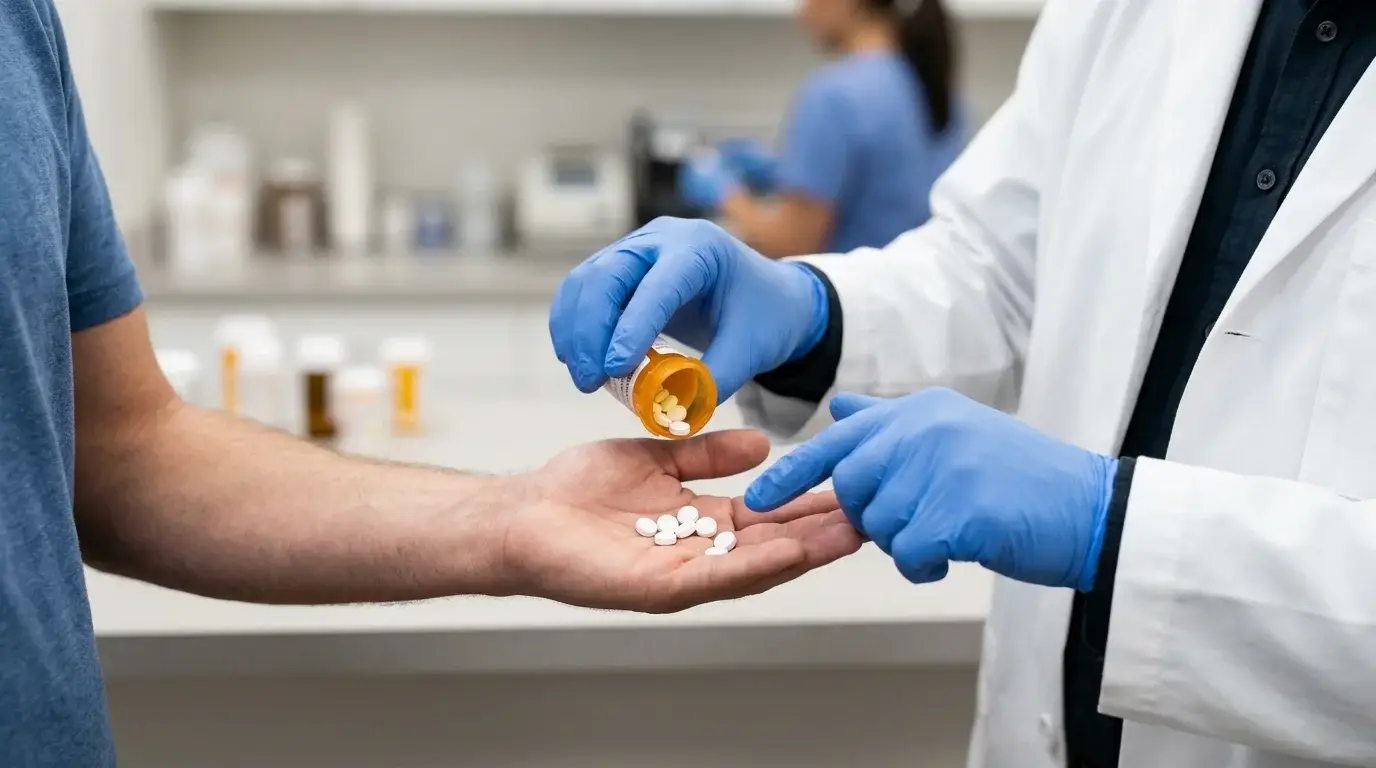
If you’re asking this question, you’re probably not overreacting. People rarely worry this specifically about something that isn’t actually a concern. Prescription pill misuse often starts legitimately, with a real prescription for real pain or anxiety, which makes it easy to rationalize even as the pattern shifts.
Watch for a few specific shifts: taking more than prescribed, running out early and needing refills sooner than scheduled, taking pills for reasons other than the original one (to sleep, to relax, to cope with a hard day), or feeling anxious at the thought of running out. Prescription origin doesn’t make misuse less serious. Benzodiazepines, opioid painkillers, and stimulants like Adderall all carry real dependency risk, and all respond to proper clinical treatment.
What’s the Difference Between a Hard Week and Needing Addiction Treatment?

A hard week ends. The using or drinking tied to it was a reaction to a specific stressor, and once that stressor passes, your behavior returns to its baseline. Needing treatment means the pattern continues regardless of circumstances, and it keeps getting harder to stop.
Ask yourself this: if the stressful situation resolved tomorrow, would your drinking or using go back to what it was before? If the honest answer is no, that’s a meaningful signal. A hard week doesn’t usually involve hiding use from people close to you, or needing a substance just to feel steady enough to function. If you’re describing your life in these terms for more than a couple of months, it’s a pattern, and patterns are exactly what treatment is designed to interrupt.
Client Spotlight
A man in his early thirties came to us after telling himself for over a year that he was just “going through a stressful time at work.” He’d started drinking every night to fall asleep, then needed it earlier and earlier in the evening to quiet his thoughts. By the time he called, he’d missed two deadlines he’d never have missed before and had started avoiding his brother’s calls because he didn’t want to explain himself. During his assessment, he told our clinical team he almost didn’t come because he thought his drinking “wasn’t that bad compared to other people.” Three weeks into residential treatment, he said the relief came from realizing he no longer had to manage a secret.
What Are 5 Signs That Indicate a Person Has an Addiction?
Five of the clearest indicators are: loss of control over use, continued use despite negative consequences, cravings, withdrawal symptoms when stopping, and neglect of responsibilities or relationships because of the substance. These five show up across nearly every substance use disorder, regardless of the specific drug involved.
- Loss of control: using more, or longer, than intended, even when you’ve decided in advance to limit it
- Continued use despite harm: health problems, legal trouble, or relationship damage that doesn’t change the behavior
- Cravings: a persistent mental pull toward the substance, sometimes triggered by stress, places, or people
- Withdrawal: physical or psychological symptoms when you stop, ranging from irritability to serious medical symptoms depending on the substance
- Neglected responsibilities: missed work, skipped family obligations, or abandoned hobbies in favor of using
What Is a Functioning Addict?
A functioning addict is someone who maintains a job, relationships, and daily responsibilities while meeting the clinical criteria for substance use disorder. The term is informal rather than a diagnosis, and it describes a real and common pattern: appearing fine on the outside while the internal pattern of use meets every clinical marker of addiction.
This is one of the most dangerous misconceptions we encounter, because it convinces capable, successful people that their use can’t really be a problem since they’re “still handling everything.” Functioning well in some areas of life doesn’t mean the substance isn’t causing harm elsewhere, often in the form of health consequences building quietly, or relationships thinning out one small withdrawal at a time. Functioning addiction tends to get worse gradually, which makes it easy to miss until something forces the issue: a health scare, a DUI, a spouse who finally says enough.
What Are the Top 3 Worst Addictions?
There’s no single ranking of “worst” addiction, because severity depends on the individual, but opioids, alcohol, and stimulants like methamphetamine are widely considered among the most dangerous due to overdose risk, withdrawal severity, and long-term health damage. Opioids, including fentanyl, carry the highest overdose risk of any commonly misused substance. Alcohol withdrawal can be medically dangerous and, in severe cases, life-threatening without supervision. Methamphetamine causes significant cardiovascular strain and long-term cognitive effects.
That said, the substance involved shapes the clinical approach, particularly around detox, more than it shapes the urgency of getting help, and every substance use disorder deserves treatment.
Will a Drug Addict Ever Change?
Yes. Addiction is a treatable chronic disease, and people recover from it every day, including people who’ve relapsed before and returned to treatment. Change isn’t guaranteed by willpower alone, but it is absolutely possible with the right clinical support, and relapse along the way doesn’t erase that possibility.
What does change actually require? Usually, it requires treatment that addresses the full picture, including any co-occurring mental health condition driving the substance use. We treat addiction and mental health as the connected conditions they typically are, because isolating one from the other tends to leave recovery incomplete. Change is slower than most people want it to be, and it isn’t linear. It happens, consistently, in people who once doubted it could.
What Are Some Encouraging Words to Say to an Addict Who Is in Rehab?
Keep it simple and specific rather than generic. “I’m proud of you for doing this” lands better than vague cheerleading. Avoid pressure about outcomes (“I know you’ll be fixed when you’re done”) and instead affirm the effort itself: the willingness to sit with something hard instead of running from it.
A few phrases that tend to help, drawn from what families have shared with our team over the years:
- “I’m not going anywhere. Take the time you need.”
- “You don’t have to explain yourself to me right now.”
- “I know this is hard work, and I see you doing it.”
- “Whatever happens, I’m glad you’re here.”
Avoid language that implies a deadline on healing, or that frames treatment as a test they need to pass. Recovery is a process, and the people going through it need patience more than praise.
What Role Does Family Play in Recognizing These Signs?

Family members often notice the pattern before the person using does, simply because denial is part of how addiction operates. If you’re reading this because you’re worried about someone else, your observations matter, even if they’re dismissed at first.
We work with family members throughout treatment as well as the individual in our care, because addiction rarely affects one person in isolation. If your person isn’t ready to make the call, you can. Our team can walk you through intake, insurance, and what residential or detox care actually involves, so you’re not navigating this blind.
How Recreate Behavioral Health of Ohio Approaches This Question
We hold a primary mental health license from the state of Ohio, granted in May 2025, which means we treat the full picture: addiction, mental health, or both together, without forcing a person into one category or the other. This matters here specifically because the question “am I an addict?” often sits right next to an unasked second question about anxiety, trauma, or depression that’s been driving the use all along.
Our clinicians are trained in evidence-based therapies, including CBT, DBT, and motivational interviewing, delivered by licensed professionals with graduate-level training. Medical detox on our Gahanna campus includes 24/7 monitoring and medication-assisted treatment where it’s clinically appropriate, for alcohol, opioid, and fentanyl withdrawal specifically. We’re part of the Recreate Behavioral Health Network, with facilities across the eastern United States, which means the clinical standards behind your care are built on experience across multiple states and years of practice.
We’re in-network with Cigna, Medical Mutual, Blue Cross Blue Shield, Tricare, and most major insurance carriers, and our team verifies your benefits before you arrive so the financial question doesn’t delay the clinical one.
If you’re still asking yourself the question that brought you to this page, let us help you find the answer. Reach out to our admissions team and start with an honest conversation.
Supporting Articles
- How to Combat Addiction: Practical, compassionate guidance for taking the first concrete steps once you’ve recognized a problem.
- CBT Therapy for Addiction Ohio: A closer look at how cognitive behavioral therapy helps interrupt the thought patterns that sustain addictive behavior.
- Residential Addiction Treatment Ohio: What a residential stay actually involves, from daily structure to therapeutic programming.
- How Long Does It Take to Break an Addiction?: A clinically grounded look at recovery timelines and what influences them.
- Addiction Treatment Statistics in Ohio: Data on addiction and treatment outcomes across the state, for readers who want the fuller context.
Frequently Asked Questions
The 3-3-3 rule isn’t a formal clinical standard, but it’s sometimes used informally to describe early recovery milestones: roughly three days to get through acute withdrawal discomfort, three weeks to start forming new routines, and three months before new patterns start to feel more stable. Actual timelines vary significantly by substance and individual.
There’s rarely a single root cause. Addiction typically develops from a combination of genetics, trauma or adverse experiences, co-occurring mental health conditions, and environmental factors like access and social influence. This is exactly why we treat addiction and mental health together rather than assuming one caused the other.
Alcohol remains the most commonly misused substance in the United States, affecting a larger share of the population than any illicit drug. That said, opioid and prescription medication misuse have driven significant increases in treatment demand and overdose deaths in recent years.
Triggers generally fall into a few categories: emotional (stress, grief, loneliness), environmental (specific places, people, or situations tied to past use), and physical (fatigue, pain, or withdrawal discomfort). Identifying your personal triggers is a core part of relapse prevention work in treatment.
Yes, this is common, particularly with functioning addiction, where responsibilities are still being met on the surface. Denial and rationalization are part of how addiction operates psychologically, which is why an honest outside assessment often reveals more than self-reflection alone.
We’re in-network with Cigna, Medical Mutual, Blue Cross Blue Shield, Tricare, and most major insurance carriers. Our team can verify your specific benefits before you commit to anything, so you understand your coverage before making a decision.
For most people using substances regularly, treatment begins with a clinical assessment followed by medical detox, where withdrawal is managed safely with 24/7 monitoring. From there, care typically transitions into residential treatment, where the deeper therapeutic work addressing both addiction and any co-occurring mental health condition begins.
Sources