Narcotics Anonymous (NA) is a peer support fellowship for people who want to stop using drugs, built around a 12-step model of shared experience, mutual support, and step-by-step personal change. NA doesn’t provide medical treatment; it’s a free, community-based program that runs alongside, not instead of, clinical care.
If you’ve ever sat in a waiting room, typed a search into your phone at 2 a.m., or heard someone mention “an NA meeting” and wondered what that actually meant, you’re not the only one. The term gets thrown around a lot, in movies, in court paperwork, in conversations with a sponsor or a sibling, and it’s rarely explained clearly. What is it, who runs it, does it cost anything, and is it enough on its own? Those are fair questions, and they deserve real answers, not vague reassurance.
At Recreate Behavioral Health of Ohio, our clinicians work with NA every week as part of discharge planning, because we’ve seen firsthand how peer support strengthens the clinical work our patients do here. We’re a Joint Commission accredited facility licensed by the Ohio Department of Mental Health and Addiction Services, offering medically supervised detox, residential treatment, and (as of a primary mental health license granted in May 2025) standalone mental health care. Our campus sits in Gahanna, a quiet suburb near Columbus, and our team coordinates with community-based 12-step programs, including NA, as part of nearly every treatment plan we build.
Where Narcotics Anonymous Came From
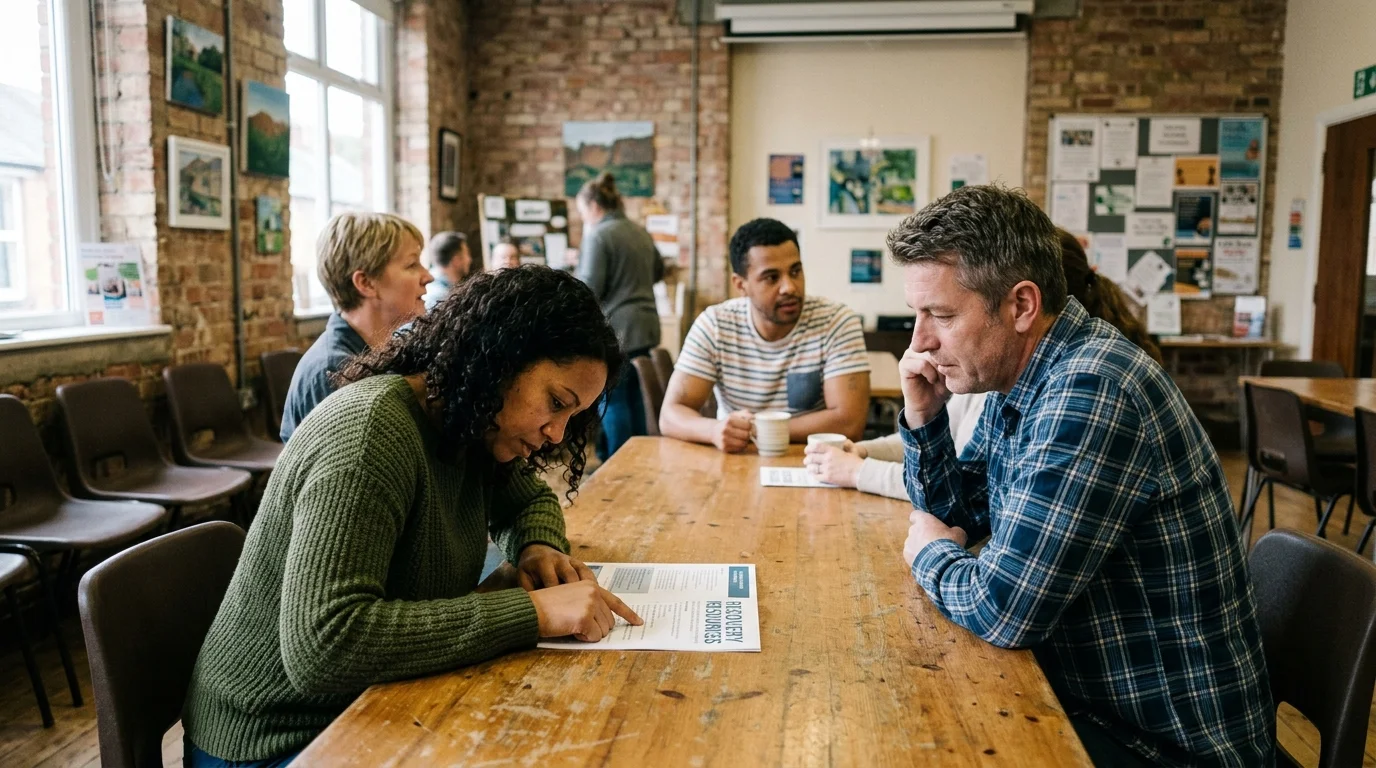
Narcotics Anonymous started in the early 1950s, founded by a small group of men in California who had gotten sober through Alcoholics Anonymous but felt the AA model didn’t quite speak to their experience with drugs specifically. They adapted the 12 steps, wrote their own literature, and built a fellowship that has since spread to meetings across the world.
NA is not a government program, and it isn’t owned or operated by any single company or clinical organization. It’s run entirely by its own members, through local groups and volunteer service structures. There’s no membership fee, no sign-up sheet, no clinical staff running the room. Anyone who wants to stop using drugs can walk in.
Why does that history matter to someone reading this today? Because it explains why NA feels the way it does: informal, peer-led, and rooted in shared experience rather than professional authority. That’s the whole design.
What NA Actually Stands For and What It Covers
NA stands for Narcotics Anonymous. The name uses “narcotics” loosely: NA meetings welcome anyone recovering from any drug, not just opioids or classic narcotics in the medical sense. Cocaine, methamphetamine, benzodiazepines, cannabis, prescription pills, even behaviors some members connect to substance use: all of it falls under the NA umbrella.
That’s a common point of confusion. Someone in early recovery from a stimulant addiction might assume NA “isn’t for them” because they picture opioid users in the room. It’s not accurate, and it can keep someone from walking through a door that was built for them too.
Here’s what typically falls under Narcotics Anonymous:
- Recovery from any drug use, not limited to opioids or “narcotics” in the strict medical sense
- Weekly or daily meetings held in community centers, churches, treatment facilities, and online
- Step work centered on personal honesty, accountability, and connection with others in recovery
- Sponsorship, where a member with more time in recovery mentors someone newer
- Literature specific to NA, distinct from AA’s Big Book, written by and for people recovering from drug addiction
How NA Differs From AA
Alcoholics Anonymous came first. It was founded in 1935 by two men in Akron, Ohio, whose own recovery from alcoholism led them to build a fellowship around shared experience and a 12-step framework. That history of AA is the direct root of NA, which adapted the same step structure roughly two decades later for people whose primary substance wasn’t alcohol.
So what’s actually different between them, beyond the name?
| Feature | Alcoholics Anonymous (AA) | Narcotics Anonymous (NA) |
|---|---|---|
| Founded | 1935, Akron, Ohio | Early 1950s, California |
| Primary focus | Alcohol use | Any drug use |
| Core text | The Big Book | Basic Text (NA’s own literature) |
| Step language | References “alcohol” specifically | Uses broader “addiction” language |
| Meeting structure | 12 steps, sponsorship, group meetings | Nearly identical: 12 steps, sponsorship, group meetings |
| Cost | Free | Free |
The mechanics are nearly identical. Someone who’s been to one can generally follow the other without much trouble. The real difference is community fit: a person recovering from heroin use might feel more understood in a room full of people who’ve faced similar substances, even though the process of recovery itself doesn’t change much between the two.
The Symbol, Colors, and Language of NA
NA’s logo is simple: a circle with a triangle inside it, representing the “self, society, service” and “recovery, unity, service” principles the fellowship is built on. You’ll often see it rendered in white on a plain background, or sometimes in a single accent color depending on local chapter materials. There’s no official mandated color scheme the way some organizations use branded palettes; different regions and printed materials vary.
NA’s slogans are short and meant to be repeated when things get hard. “Just for today” is probably the most recognized one, a reminder that recovery only has to be managed one day at a time, not for the rest of a person’s life all at once. Other phrases members use often: “One day at a time,” “Keep coming back,” and “Progress, not perfection.”
The message underneath all of it is consistent: recovery is possible for anyone, addiction is a disease that responds to support and structure, and no one has to do this without other people. That’s not a slogan we invented, it’s the actual, stated purpose of NA’s own literature, and it lines up closely with how we talk about addiction here at Recreate Ohio: as a chronic disease, not a character flaw, that responds to proper treatment.
Why Treatment Completes What NA Starts
NA meetings offer connection, accountability, and a sense that other people have felt exactly what you’re feeling. What they don’t offer is medical supervision, individualized clinical assessment, or treatment for what’s often happening underneath the drug use.
Addiction rarely shows up by itself. Depression, anxiety, trauma, bipolar disorder: these conditions frequently travel with substance use, and a peer support meeting isn’t equipped to diagnose or treat them. That’s where clinical care comes in.
Client Spotlight
A woman named Renee had been attending NA meetings for nearly a year before she called Recreate Behavioral Health of Ohio. She was proud of her sobriety and credited the group with keeping her accountable, but she kept describing panic attacks that showed up out of nowhere, sometimes triggered by nothing she could name. During her assessment, our clinical team identified an underlying anxiety disorder that had never been formally treated. Renee completed residential care with us, continued her NA meetings the entire time, and left with a treatment plan that finally addressed both pieces of what she’d been carrying.
That’s the pattern we see again and again: NA supports the ongoing work of staying clean, and clinical treatment identifies and treats what’s driving the addiction in the first place. Neither replaces the other.
At Recreate Ohio, we build every treatment plan around the individual, whether they arrive with an NA sponsor already in their corner or have never set foot in a meeting. Detox stabilizes the body. Residential treatment digs into the co-occurring conditions, using CBT, DBT, motivational interviewing, and medication-assisted treatment where it’s appropriate. And once someone transitions to outpatient care, we coordinate with community partners, including 12-step programs like NA, to keep that support structure intact.
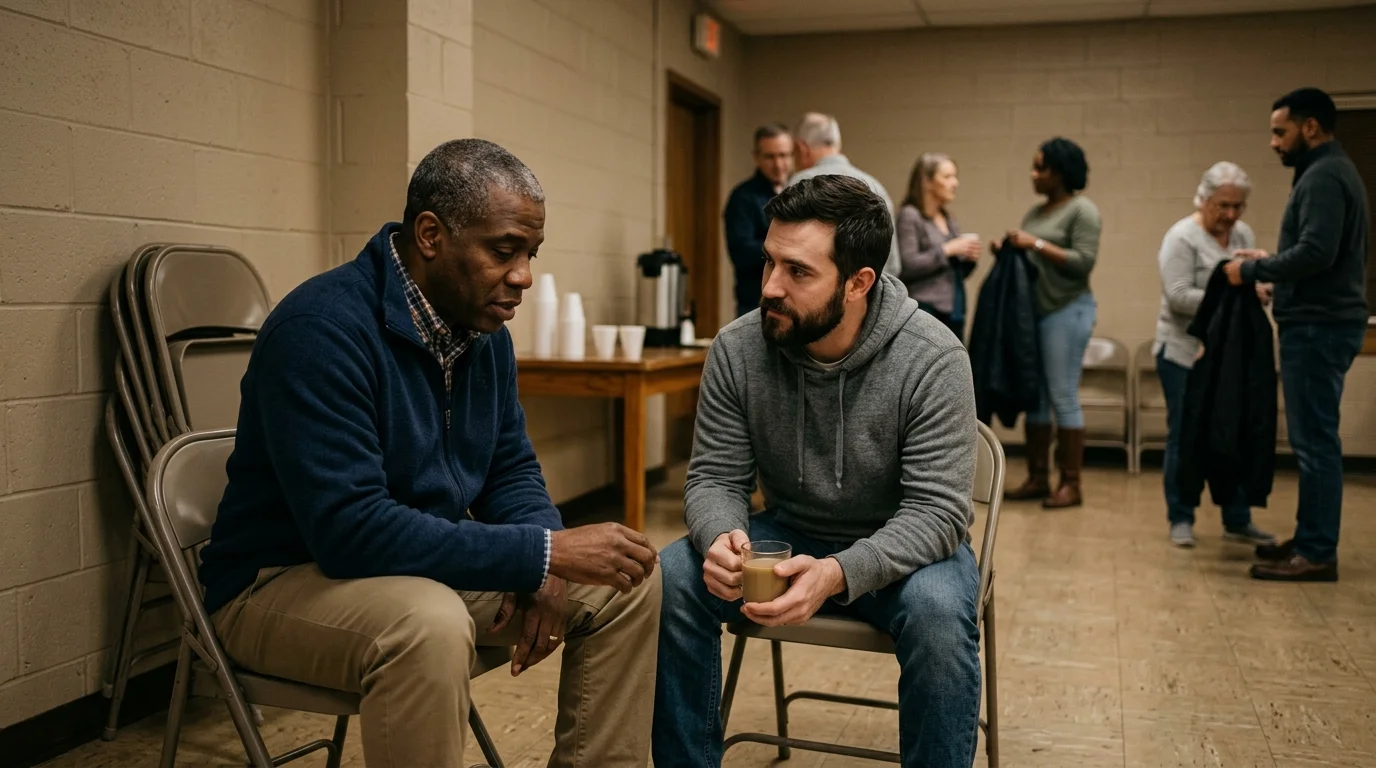
What a Person Can Expect Walking Into Their First Meeting
Wondering what actually happens once you walk in? It’s less intimidating than most people expect.
- Arrive and find a seat. Most meetings are informal; no one checks names at the door.
- Listen to an opening reading. A member usually reads a short passage explaining NA’s purpose.
- Hear others share. Members speak about their own experience, current struggles, or milestones.
- Speak if you want to, or don’t. No one is required to share, especially at a first meeting.
- Stay after if you’d like. Many groups linger to talk informally, exchange numbers, or connect newcomers with a sponsor.
That’s it. There’s no intake form, no clinical evaluation, no cost. It’s a room full of people who’ve been where you are.
How Recreate Behavioral Health of Ohio Approaches Community Support

We’ve built our continuum of care around the understanding that recovery doesn’t end when someone leaves our campus. Our clinical team, including licensed counselors with graduate-level training, integrates 12-step encouragement into treatment planning from the first clinical assessment, not as an afterthought tacked onto a discharge packet.
Because we hold both addiction treatment licensing and a primary mental health license from the state of Ohio, we’re positioned to catch what a support group alone can’t: the depression, the trauma history, the bipolar diagnosis that’s been quietly driving someone’s drug use for years. We treat those conditions as connected, because clinically, they usually are.
We’re part of the Recreate Behavioral Health Network, with facilities across the eastern United States, which means our clinical protocols reflect standards developed and refined across multiple states, not just what one local program happens to believe works. And we’re in-network with Cigna, Medical Mutual, Blue Cross Blue Shield, Tricare, and most major insurance carriers, with a team that handles verification so a phone call doesn’t turn into a financial guessing game.
Supporting Articles
- How to Combat Addiction: A practical look at what fighting addiction actually involves, from acknowledging the problem to building a treatment plan.
- Dual Diagnosis Treatment Centers in Ohio Comprehensive Care for Co-Occurring Disorders: Explains why treating addiction and mental health together produces better clinical results than treating either alone.
- Stages of Recovery: Breaks down what recovery looks like from detox through long-term maintenance, including where peer support fits.
- Supporting a Recovering Addict: Guidance for family members trying to figure out how to help without enabling.
- Medication Assisted Treatment Ohio: Covers how MAT works alongside therapy and community support for opioid and alcohol recovery.
Frequently Asked Questions
NA stands for Narcotics Anonymous, a free, peer-led support fellowship for anyone recovering from drug use. It uses a 12-step model adapted from Alcoholics Anonymous but written specifically for people recovering from drugs rather than alcohol.
NA covers recovery from any drug, including opioids, stimulants, benzodiazepines, and cannabis, not just substances that are technically classified as narcotics. Meetings, sponsorship, and step work are all part of the fellowship.
NA and AA share the same 12-step structure, but AA focuses specifically on alcohol and NA addresses any drug use. NA came after AA, adapting its language and literature for a broader range of substances.
The NA logo is a circle with a triangle inside it, representing the fellowship’s core principles of self, society, and service, along with recovery, unity, and service. It doesn’t carry an official mandated color scheme.
NA’s best-known slogan is “Just for today,” which reminds members to focus on staying clean one day at a time instead of feeling overwhelmed by the idea of forever. Other common phrases include “Keep coming back” and “Progress, not perfection.”
No. NA is peer support, not medical or clinical treatment, and it doesn’t diagnose or treat co-occurring conditions like depression or trauma. It works best alongside, not instead of, professional detox and therapy.
NA meetings are free to attend, and there’s no formal membership process or fee structure. Some groups pass a basket for voluntary donations to cover rent or literature, but attendance itself never requires payment.