
If you’re searching for how to get sober fast, you’re likely dealing with an urgent situation — either for yourself or someone you care about. The reality is that while there’s no magic solution to instantly reverse intoxication, there are safe, effective approaches to begin recovery quickly and properly.
Getting sober fast requires immediate cessation of substance use, proper hydration, medical supervision for withdrawal, and professional treatment to address the underlying causes of addiction. Time is the only true way to metabolize substances, but medically supervised detox can make the process safer and more comfortable.
Recreate Behavioral Health of Ohio has provided comprehensive addiction treatment and dual diagnosis care from our serene campus in Gahanna since opening our doors. Our medical detox program offers 24/7 monitoring, medication-assisted treatment, and personalized withdrawal management for alcohol, opioids, and other substances. With Joint Commission accreditation and Ohio DMHAS licensing, our clinical team specializes in the safe, supervised approach to getting sober that protects your health while starting recovery on solid ground.
Understanding What “Getting Sober” Actually Means

When people ask how to get sober fast, they’re usually thinking about two different things. There’s acute intoxication — being under the influence right now — and there’s the longer process of detoxification and early recovery.
For immediate intoxication, here’s what you need to know: your liver processes about one standard drink per hour. That’s biology, not willpower. A standard drink is 12 ounces of beer, 5 ounces of wine, or 1.5 ounces of liquor. If you’ve had four drinks, you’re looking at roughly four hours for your blood alcohol to return to zero.
But getting sober in the recovery sense? That’s a different timeline entirely.
How Long Does It Take to Get Sober from Alcohol?
The sobering process happens in stages, and each person’s experience varies based on several factors:
| Timeline | What’s Happening | What to Expect |
|---|---|---|
| 0-6 hours | Initial metabolism | Body begins processing alcohol at ~1 drink per hour |
| 6-24 hours | Early withdrawal symptoms may begin | Anxiety, nausea, sweating, tremors |
| 24-72 hours | Peak withdrawal period | Most intense symptoms, medical supervision recommended |
| 3-7 days | Acute withdrawal phase | Gradual improvement, continued medical monitoring |
| 1-4 weeks | Post-acute symptoms | Sleep issues, mood swings, cognitive fog |
Several factors affect how quickly you metabolize substances:
- Body weight and composition — More muscle mass typically means faster processing
- Age and overall health — Younger, healthier individuals metabolize substances more efficiently
- Gender — Women generally process alcohol more slowly than men
- Food consumption — Eating slows alcohol absorption but doesn’t speed up elimination
- Medications — Some prescription drugs interfere with alcohol metabolism
- Frequency of use — Regular drinkers may have altered liver function
Client Spotlight
Derek had been drinking heavily for three years when his wife gave him an ultimatum. He called us at 6 AM on a Tuesday, still intoxicated from the night before, asking if he could “get sober today” and be back to work by Friday. Our admissions team explained that safe detox typically takes 5-7 days, and that rushing the process could be dangerous. Derek entered our medical detox that afternoon and completed residential treatment three weeks later. Today, he credits taking the time to do it right with saving his marriage and his health.
What Actually Works to Get Sober Fast (And What Doesn’t)
Let’s address the myths first. You’ve probably heard these “quick fixes” for sobering up:
What DOESN’T work:
- Cold showers (you’ll just be a wet, drunk person)
- Black coffee (you’ll be an alert, drunk person)
- Eating bread or greasy food (doesn’t speed up alcohol metabolism)
- Exercise or “sweating it out” (alcohol isn’t eliminated through sweat)
- Vomiting (most alcohol is already absorbed)
What DOES help:
- Time — The only real way to metabolize substances
- Hydration — Water helps prevent dehydration but doesn’t speed up sobriety
- Rest — Allows your body to focus energy on processing substances
- Medical supervision — Ensures safety during withdrawal
- Proper nutrition — Supports your body’s recovery processes
Here’s the truth: if you’re asking how to get sober fast because you’re in crisis, you need professional help. Don’t try to detox alone.
The Safe Approach: Medical Detox
Medical detoxification is the safest, most effective way to begin recovery quickly. Here’s what it involves:
24/7 Medical Monitoring
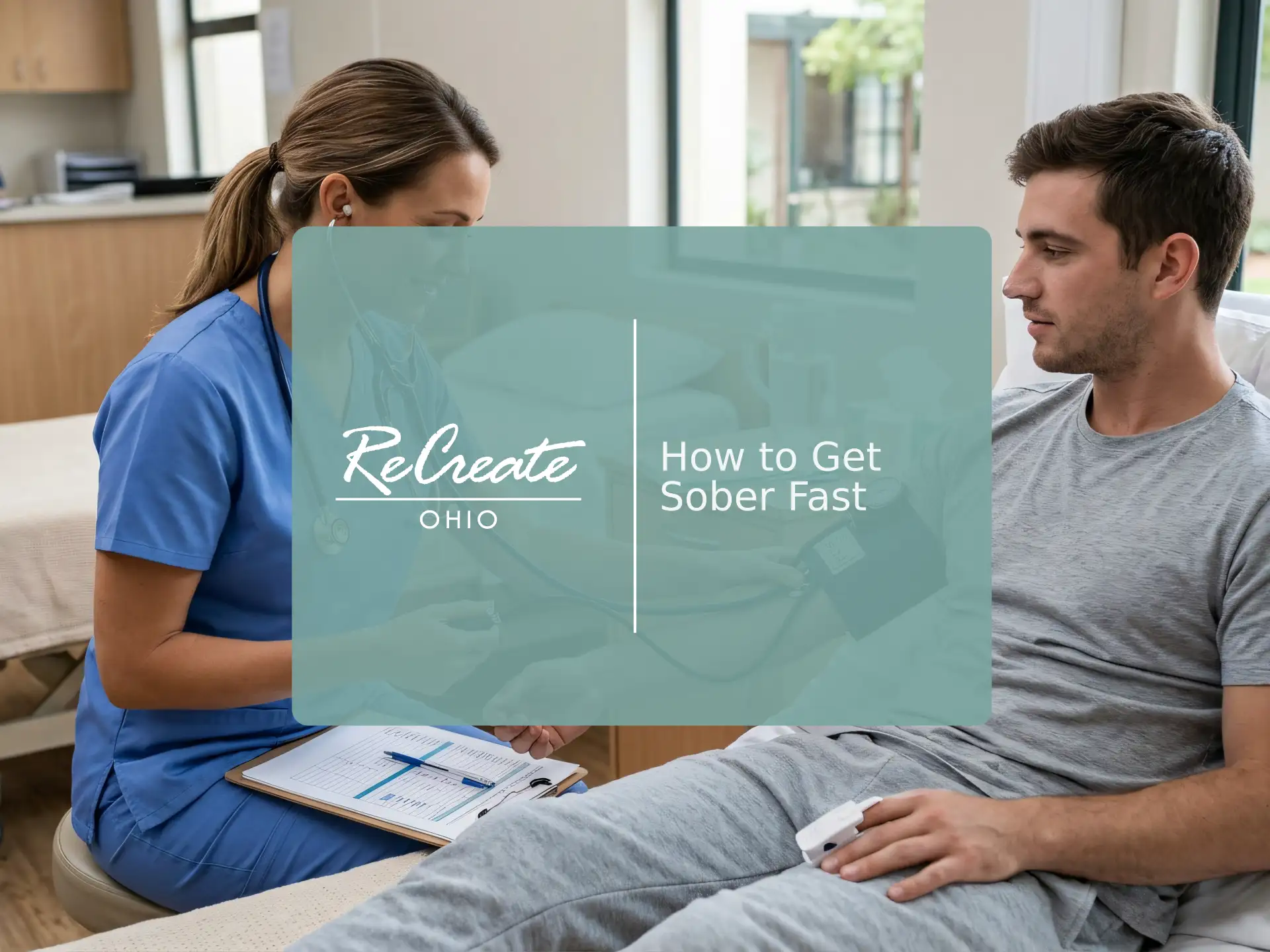
During detox, medical professionals monitor your vital signs, assess withdrawal symptoms, and adjust treatment as needed. This isn’t just about comfort — it’s about safety. Alcohol withdrawal can be life-threatening in severe cases.
Medication-Assisted Treatment (MAT)
Certain medications can ease withdrawal symptoms and reduce cravings:
- Benzodiazepines for alcohol withdrawal anxiety and seizure prevention
- Naltrexone to reduce alcohol cravings
- Acamprosate to help maintain sobriety
- Gabapentin for anxiety and sleep issues
Personalized Withdrawal Management
Everyone’s detox experience is different. Medical teams adjust care based on:
- Substance use history
- Co-occurring mental health conditions
- Physical health status
- Previous withdrawal experiences
Why Trying to Get Sober Fast on Your Own Is Dangerous
Withdrawal from alcohol and certain drugs can cause serious medical complications:
- Delirium tremens (DTs) — Life-threatening alcohol withdrawal syndrome
- Seizures — Can occur 12-48 hours after last drink
- Cardiac complications — Heart rhythm problems, blood pressure spikes
- Severe dehydration — From vomiting, sweating, and inability to keep fluids down
- Mental health crisis — Severe depression, anxiety, or suicidal thoughts
The statistics are sobering: untreated alcohol withdrawal has a mortality rate of up to 15%. Medically supervised detox reduces this to less than 1%.
Factors That Affect Your Recovery Timeline
Getting sober isn’t just about clearing substances from your system. Several factors influence how quickly you can safely begin recovery:
| Factor | Impact on Timeline | Why It Matters |
|---|---|---|
| Substance type | Alcohol: 3-7 days; Opioids: 5-14 days | Different drugs have different withdrawal patterns |
| Duration of use | Longer use = longer detox | Body needs more time to readjust |
| Amount used | Higher doses = more intense withdrawal | Medical supervision becomes more critical |
| Co-occurring disorders | Can extend timeline significantly | Mental health affects physical recovery |
| Physical health | Poor health slows recovery | Underlying conditions complicate withdrawal |
| Support system | Strong support = better outcomes | Recovery isn’t a solo journey |
The Real Timeline for Getting Your Life Back
When people ask how to get sober fast, they’re often really asking: “How quickly can I get my life back?” Here’s the honest answer:
Week 1: Focus on physical stabilization. You’re not thinking clearly yet. That’s normal.
Weeks 2-4: Mental fog starts clearing. Sleep improves. Energy returns gradually.
Months 2-3: Real psychological work begins. This is when therapy becomes most effective.
Months 4-12: Building new habits, relationships, and coping skills. The foundation of long-term recovery.
Recovery isn’t linear. You might feel great on day 10 and terrible on day 30. That doesn’t mean you’re failing.
Client Spotlight
Patricia’s daughter found her unconscious after a three-day drinking binge and called 911. After Patricia was medically stable, her daughter researched treatment options and called Recreate Ohio. Patricia was angry about being “forced” into treatment, but agreed to stay for detox. By day four, when the physical symptoms subsided, she started seeing how alcohol had taken over her life. She completed our residential program and now calls her daughter daily — not because she has to, but because she wants to. “I didn’t think I wanted to get sober,” she says. “Turns out I just didn’t know how.”
Beyond Detox: What Comes Next

Getting the substances out of your system is just the beginning. Real recovery addresses why you started using in the first place:
Dual Diagnosis Treatment
Most people with addiction also struggle with mental health conditions — depression, anxiety, PTSD, bipolar disorder. Treating only the addiction while ignoring the underlying mental health issues sets people up for relapse.
Evidence-Based Therapies
- Cognitive Behavioral Therapy (CBT) — Identifies and changes thought patterns that lead to substance use
- Dialectical Behavior Therapy (DBT) — Builds emotional regulation and distress tolerance skills
- Motivational Interviewing — Helps you find your own reasons for change
- Group therapy — Learn from others with similar experiences
Family Involvement
Addiction affects entire families. Recovery works better when families are involved in the healing process through education, therapy, and support groups.
How Recreate Behavioral Health of Ohio Approaches Rapid Recovery
Our approach to helping people get sober safely combines medical expertise with compassionate care. We understand that when someone calls asking how to get sober fast, they’re often in crisis.
Here’s what makes our program different:
Immediate Assessment: Our admissions team can often arrange same-day intake for people in medical crisis.
Personalized Detox Plans: No two people detox the same way. Our medical team creates individualized withdrawal management plans based on your specific situation.
Dual Diagnosis Specialization: We treat addiction and mental health conditions simultaneously, not separately. This integrated approach produces better long-term outcomes.
Serene Campus Environment: Our Gahanna location provides a peaceful setting for recovery, away from triggers and distractions. Sometimes getting sober fast means getting away from your usual environment.
Continuity of Care: We don’t just detox people and send them home. We work with community partners to ensure smooth transitions to outpatient care and ongoing support.
Insurance Accessibility: We’re in-network with Cigna, Medical Mutual, Blue Cross Blue Shield, Tricare, and most major insurance carriers. Financial barriers shouldn’t prevent anyone from getting help.
Red Flags: When You Need Professional Help Immediately
Don’t try to get sober on your own if you experience any of these:
- History of seizures or DTs during previous withdrawal attempts
- Drinking or using drugs daily for weeks or months
- Unable to stop despite wanting to
- Physical withdrawal symptoms when you try to cut back
- Co-occurring mental health conditions
- Suicidal thoughts or behaviors
- No support system at home
If you’re having thoughts of suicide, call 988 immediately. If you’re experiencing severe withdrawal symptoms, go to the emergency room.
The Bottom Line on Getting Sober Fast
Here’s what you need to know: there’s no shortcut to recovery, but there is a safe, effective path that starts right now. Medical detox can begin immediately and typically takes 5-7 days. Residential treatment usually lasts 30-90 days. Outpatient support continues for months or years.
That might not sound “fast,” but consider this — how long have you been struggling with addiction? How much time has it already cost you? Investing a few weeks or months in proper treatment can give you decades of healthy life back.
Recovery is possible. It starts with making one call.
Frequently Asked Questions
How long does it take to completely sober up from alcohol?
Your liver processes approximately one standard drink per hour. Complete sobriety from acute intoxication typically takes 6-24 hours depending on how much you consumed, but safe withdrawal from alcohol dependence requires medical supervision over 5-7 days.
Can I speed up the sobering process with coffee or cold showers?
No. Coffee, cold showers, exercise, and eating don’t speed up alcohol metabolism. Only time allows your liver to process alcohol at its natural rate of about one drink per hour.
Is it dangerous to try getting sober without medical help?
Yes, especially for alcohol and benzodiazepines. Withdrawal can cause life-threatening seizures, delirium tremens, and cardiac complications. Medical supervision reduces withdrawal mortality from 15% to less than 1%.
How quickly can I start treatment if I call today?
Many treatment facilities, including Recreate Ohio, can arrange same-day or next-day admission for people in medical crisis. Our admissions team works quickly to verify insurance and coordinate safe intake.
What’s the difference between detox and getting sober?
Detox removes substances from your body over 5-14 days. Getting sober involves detox plus addressing the underlying causes of addiction through therapy, which typically takes months of treatment and ongoing support.
Will insurance cover rapid detox treatment?
Most major insurance plans cover medically necessary detox and addiction treatment. We’re in-network with Cigna, Medical Mutual, Blue Cross Blue Shield, and Tricare, and can verify your coverage quickly.
Can I detox from multiple substances at the same time?
Yes, but it requires specialized medical management. Different substances have different withdrawal timelines and complications. Professional medical teams can safely manage complex detox situations involving multiple substances.