


When someone drinks too much alcohol too quickly, their body can’t keep up. What starts as intoxication can rapidly become something far more dangerous — and potentially deadly.
Alcohol poisoning occurs when excessive alcohol consumption overwhelms the body’s ability to process it safely, leading to toxic blood alcohol levels that suppress vital functions like breathing and heart rate.
Recreate Behavioral Health of Ohio has treated thousands of individuals struggling with alcohol use disorders since opening our doors in Gahanna. Our medical detox program and dual diagnosis specialists understand that alcohol poisoning often signals a deeper problem with alcohol dependency. With Joint Commission accreditation and licensed medical professionals providing 24/7 monitoring, we’ve seen firsthand how quickly alcohol consumption can escalate from social drinking to life-threatening emergencies.
What Is Alcohol Poisoning?
Alcohol poisoning — also called alcohol overdose — happens when someone consumes more alcohol than their liver can metabolize. Your liver can only process about one standard drink per hour. When you drink faster than this rate, alcohol builds up in your bloodstream to dangerous levels.
Unlike being drunk or intoxicated, alcohol poisoning is a medical emergency. The alcohol in your system begins shutting down vital bodily functions, including your breathing, heart rate, and gag reflex. This isn’t something you can “sleep off” — it requires immediate medical intervention.
Here’s what happens in your body: as blood alcohol concentration (BAC) rises above 0.25%, your brain’s control over essential functions starts failing. Your breathing slows, your body temperature drops, and you risk losing consciousness permanently.
Signs of Alcohol Poisoning vs. Being Drunk
Many people wonder how to tell the difference between someone who’s had too much to drink and someone experiencing alcohol poisoning. The distinction can be life-saving.
| Normal Intoxication | Alcohol Poisoning |
|---|---|
| Slurred speech, unsteady walking | Confusion or complete disorientation |
| Loud or inappropriate behavior | Vomiting repeatedly or uncontrollably |
| Poor judgment and decision-making | Slow or irregular breathing (under 8 breaths/minute) |
| May pass out but wakes when stimulated | Unconscious and unresponsive to stimulation |
| Normal skin color | Blue, gray, or pale skin color |
| Normal body temperature | Low body temperature and cold, clammy skin |
The key difference? Someone who’s intoxicated can still respond to you, maintain basic bodily functions, and will gradually sober up. Someone with alcohol poisoning shows signs of their body systems shutting down.
The Five Critical Signs of Alcohol Poisoning

Medical professionals look for these five warning signs when assessing potential alcohol poisoning:
1. Severe Confusion or Mental State Changes
The person seems completely disoriented, doesn’t know where they are, or can’t recognize familiar people. This goes beyond normal drunken confusion — they appear genuinely lost and may not respond to their name.
2. Persistent Vomiting
While drunk people might vomit once or twice, alcohol poisoning causes repeated, uncontrollable vomiting. This is especially dangerous because an unconscious person can choke on their own vomit.
3. Dangerously Slow Breathing
Normal breathing is 12-20 breaths per minute. With alcohol poisoning, you’ll see fewer than 8 breaths per minute, or gaps of 10+ seconds between breaths. The breathing may also sound irregular or labored.
4. Hypothermia and Skin Color Changes
Low body temperature causes pale, blue, or gray skin — especially around the lips and fingertips. The skin feels cold and clammy to touch. This indicates the body’s systems are failing.
5. Loss of Consciousness
The person can’t be roused by shouting, shaking, or painful stimuli. They may appear to be sleeping, but this is actually unconsciousness — a sign of severe alcohol toxicity.
The Three Stages of Alcohol Poisoning
Medical professionals recognize three progressive stages of alcohol poisoning, each more dangerous than the last:
Stage 1: Vomiting and Disorientation (BAC 0.11-0.16)
- Repeated vomiting
- Severe confusion
- Loss of coordination
- Still somewhat responsive to stimulation
Stage 2: Blackout and System Depression (BAC 0.17-0.30)
- Complete memory blackouts
- Severely depressed breathing and heart rate
- Risk of choking on vomit
- May appear unconscious but still breathing
Stage 3: Coma and Life-Threatening Complications (BAC 0.31+)
- Complete unconsciousness
- Extremely slow or stopped breathing
- Heart rhythm abnormalities
- High risk of permanent brain damage or death
Don’t wait to see which stage develops. Any signs of alcohol poisoning require immediate emergency care.
Effects of Alcohol Poisoning on the Body

Alcohol poisoning affects multiple body systems simultaneously. Understanding these effects helps explain why this condition is so dangerous:
Central Nervous System: Alcohol depresses brain function, slowing reflexes, impairing judgment, and eventually shutting down vital control centers. The gag reflex disappears, increasing choking risk.
Respiratory System: Breathing becomes slow, shallow, and irregular. Oxygen levels drop while carbon dioxide builds up, creating a life-threatening imbalance.
Cardiovascular System: Heart rate slows dramatically, and blood pressure can drop to dangerous levels. Poor circulation means organs don’t receive adequate oxygen.
Temperature Regulation: The body loses its ability to maintain normal temperature, leading to hypothermia even in warm environments.
Digestive System: Severe vomiting can cause dehydration, electrolyte imbalances, and aspiration pneumonia if vomit enters the lungs.
Client Spotlight
Kevin came to Recreate Ohio after his third alcohol poisoning incident in two years. “I kept telling myself I was just a heavy drinker,” he shared during treatment. “But when I woke up in the ICU with a breathing tube, I realized my drinking had crossed a line I didn’t even know existed.” Through our medical detox and residential program, Kevin learned that his binge drinking pattern was actually a form of alcohol use disorder that required comprehensive treatment, not just avoiding “too much” alcohol.
How Medical Professionals Treat Alcohol Poisoning
When someone arrives at the hospital with alcohol poisoning, medical teams act quickly to stabilize vital functions and prevent complications. Here’s what typically happens:
Immediate Assessment: Medical staff check breathing, heart rate, blood pressure, and body temperature while drawing blood to measure BAC and check for other complications.
Airway Protection: If the person is unconscious, they may need intubation to protect their airway and ensure adequate oxygen delivery.
IV Fluids and Supplements: IV fluids combat dehydration while thiamine (vitamin B1) and glucose help protect brain function and prevent further complications.
Monitoring and Support: Continuous monitoring of vital signs allows immediate intervention if breathing or heart function deteriorates further.
Temperature Management: Warming blankets and other measures restore normal body temperature safely.
The goal isn’t to “sober up” the patient quickly — it’s to keep them stable while their body naturally metabolizes the alcohol. This process can take many hours, and complications can arise at any point.
Who’s at Risk for Alcohol Poisoning?
While anyone who drinks excessively can develop alcohol poisoning, certain factors increase the risk:
- Binge drinkers: Consuming 4+ drinks (women) or 5+ drinks (men) within 2 hours
- College students and young adults: Often engage in dangerous drinking games or challenges
- People mixing alcohol with medications: Especially sedatives, painkillers, or antidepressants
- Those with smaller body size: Less body mass means alcohol reaches higher concentrations faster
- Infrequent drinkers: Lower tolerance means dangerous BAC levels are reached sooner
- People drinking on empty stomachs: Food slows alcohol absorption significantly
But here’s what many people don’t realize: regular heavy drinking actually increases your risk. While tolerance might make you feel less intoxicated, your liver is still processing the same amount of alcohol — and can become overwhelmed just as easily.
What to Do If You Suspect Alcohol Poisoning
If someone shows signs of alcohol poisoning, every minute matters. Here’s exactly what to do:
Call 911 immediately. Don’t wait to see if symptoms improve — they often get worse quickly.
Keep the person awake and sitting up. If they must lie down, turn them on their side to prevent choking if they vomit.
Stay with them. Monitor their breathing and be ready to perform CPR if necessary.
**Don’t try these “remedies”:
- Cold showers or slapping them awake
- Making them drink coffee or water
- Making them vomit
- Letting them “sleep it off”
Give paramedics complete information: What they drank, how much, over what time period, and any medications or drugs involved.
The key message? You can’t fix alcohol poisoning at home. Professional medical intervention is the only safe approach.
When Alcohol Poisoning Signals a Deeper Problem
Experiencing alcohol poisoning often indicates an underlying alcohol use disorder. Many people who end up in emergency rooms for alcohol poisoning aren’t first-time drinkers — they’re individuals whose relationship with alcohol has become dangerous.
At Recreate Ohio, we regularly treat people whose journey to recovery began with an alcohol poisoning scare. The medical emergency becomes a wake-up call that their drinking has crossed from social or even heavy use into something requiring professional treatment.
Research shows that individuals who experience alcohol poisoning are significantly more likely to have alcohol use disorder than those who’ve never had an overdose incident. The patterns of drinking that lead to alcohol poisoning — binge drinking, drinking to blackout, or regular heavy consumption — are the same patterns that characterize alcohol addiction.
If you or someone you love has experienced alcohol poisoning, it’s worth asking: was this a one-time mistake, or part of a larger pattern with alcohol?
Recovery After Alcohol Poisoning
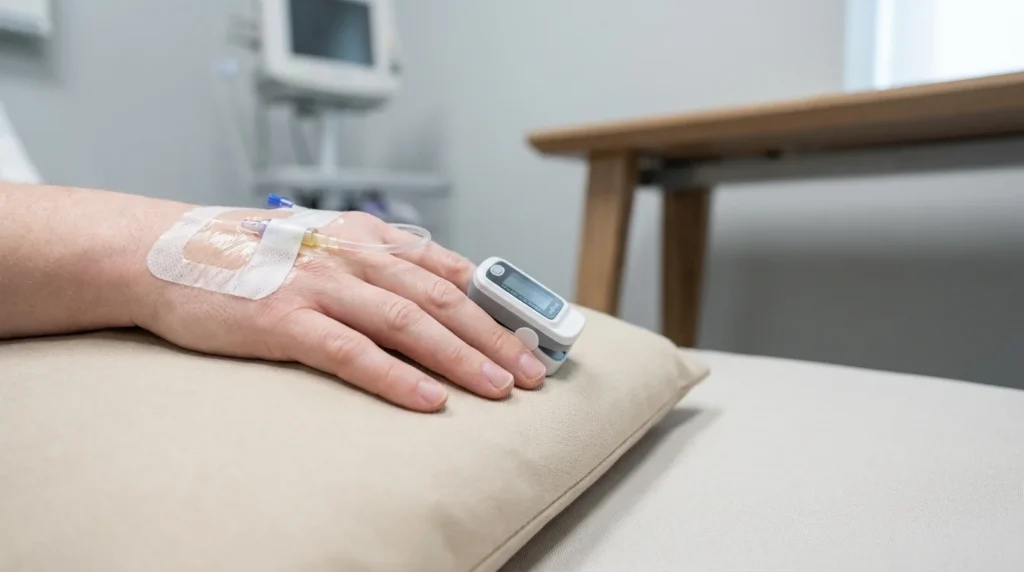
Surviving alcohol poisoning is just the first step. The physical recovery can take days or weeks, depending on the severity of the incident. Some people experience lingering effects like:
- Digestive issues and nausea
- Difficulty concentrating
- Sleep disturbances
- Anxiety or mood changes
- Memory problems
More importantly, many people need to address the underlying drinking behavior that led to the poisoning in the first place. This is where comprehensive addiction treatment becomes essential.
Why Trust Recreate Behavioral Health of Ohio?
When alcohol poisoning serves as a wake-up call about drinking patterns, families throughout Central Ohio turn to our Gahanna facility for answers. Our medical detox program provides the safe, supervised environment needed to address alcohol dependency, while our dual diagnosis expertise recognizes that many people struggling with alcohol also manage co-occurring mental health conditions like anxiety or depression.
What sets our approach apart is the integration of medical care with evidence-based therapies. Our licensed clinical team includes professionals with graduate-level training in addiction medicine, and we’re accredited by the Joint Commission for our commitment to quality care. We don’t just help people get through detox safely — we build comprehensive treatment plans that address the whole person.
Our serene campus provides the kind of environment where real healing can begin, away from the triggers and stresses that often fuel problematic drinking. And because we’re in-network with major insurance carriers including Cigna, Medical Mutual, and Blue Cross Blue Shield, families can access quality care without financial barriers standing in the way.
Frequently Asked Questions
Can you die from alcohol poisoning?
Yes, alcohol poisoning can be fatal. It kills approximately 2,200 people each year in the United States by suppressing vital functions like breathing and heart rate. This is why immediate medical attention is critical.
How long does alcohol poisoning last?
The acute phase typically lasts 12-24 hours as your body processes the alcohol, but recovery can take several days. Some effects like dehydration, digestive issues, and memory problems may persist longer.
What blood alcohol level causes alcohol poisoning?
Alcohol poisoning typically occurs at BAC levels above 0.25%, though it can happen at lower levels depending on individual factors. However, dangerous symptoms can begin appearing at 0.15% or higher.
Is alcohol poisoning the same as alcohol overdose?
Yes, these terms mean the same thing. Both describe the dangerous condition that occurs when someone consumes toxic levels of alcohol that overwhelm their body’s ability to function safely.
Can alcohol poisoning cause permanent damage?
Yes, severe alcohol poisoning can cause permanent brain damage due to oxygen deprivation, liver damage, and other organ complications. Early medical intervention reduces the risk of lasting effects.
Should I make someone with alcohol poisoning throw up?
No, never try to make someone vomit. They could choke on their vomit, especially if they’re unconscious or have a suppressed gag reflex. Call 911 and keep them on their side if they vomit naturally.
How is alcohol poisoning different from a bad hangover?
Alcohol poisoning involves life-threatening symptoms like severely slow breathing, unconsciousness, and hypothermia that require immediate medical care. A hangover, while unpleasant, doesn’t involve dangerous vital sign changes.
Sources