Depression Treatment
Depression treatment can be as complicated as the condition itself. Recreate Behavioral Health of Ohio offers treatment options, from proven medications to new therapies, equipping you with knowledge to take active steps to find the right depression treatment center for you or your loved one.
What Is the Best Treatment for Depression in Ohio?
The best depression treatment is the one built around an accurate diagnosis and matched to how severe your symptoms are. For mild to moderate depression, that often means outpatient therapy (CBT or DBT) paired with medication management. For depression severe enough to interfere with daily functioning, safety, or co-occurring substance use, residential treatment provides the structure and round-the-clock support that outpatient care can’t match.
Recreate Behavioral Health of Ohio holds a primary mental health license from the state of Ohio, meaning depression can be treated here as the primary diagnosis, independent of any substance use disorder. That matters because not everyone facing depression is also facing addiction, and treatment should reflect that reality rather than forcing every case through an addiction-first framework. Our serene campus in Gahanna, a peaceful suburb just minutes from Columbus, gives patients the kind of calm, triggerless environment where the harder clinical work of depression treatment can actually take root.
Brief Overview
Depression is a complex and pervasive mental health condition requiring a complicated treatment approach tailored to individual symptoms and experiences, emphasizing the need for a precise diagnostic evaluation.
Recreate Ohio offers residential treatment and primary mental health care on its Gahanna campus, with personalized plans that fit each person’s needs and life, and works with trusted community partners to line up outpatient care for the next step.
Continued care and outpatient treatment are critical components of effective clinical depression treatment, as they provide the ongoing support and tools necessary for maintaining mental health and preventing future episodes of depression.
Understanding Depression and Its Impact
Depression is a mental illness that can grip individuals in a way that causes loss of motivation and for some it is the precursor and rumination of ending it all. This is also referred to as suicidal ideation. Depression extends deep, as persistent feelings of despair and a diminished capacity to function pervade the lives of those affected. Approximately 7.1% of U.S. adults grapple with Major Depressive Disorder (MDD), also known as clinical depression, while Persistent Depressive Disorder (PDD) haunts about 1.5%, with a higher prevalence among females. Both MDD and PDD are diagnosis of types of depression also referred to as a mental health disorder, falling under the broader category of mental illness.
Diagnosing this major depression or clinical depression requires a psychiatric evaluation, and a deep exploration of one’s current and past mental health challenges and symptoms. This thorough process results in a unique treatment plan, created based upon the individual’s specific experience of depression. It’s a nuanced process, aligning with the rigorous DSM-5 criteria to ensure that each person’s battle with depression is met with the precision and care it demands.
What Does Depression Feel Like?
Depression rarely feels like simple sadness. It more often feels like a heaviness that settles into everything. There’s a flatness where joy used to be, a fog that makes clear thinking feel impossible, a tiredness that sleep doesn’t fix. Some describe it as moving through the day underwater, everything muffled and slowed down and harder to reach.
For others, depression shows up as irritability or numbness rather than tears. It can feel like watching your own life from a distance, going through the motions of work or parenting or friendship while something essential has gone quiet inside. There is no single way depression feels, which is part of why it goes unrecognized so often, including by the person experiencing it.
What Are the Signs of Depression?
The signs of depression typically include persistent sadness or low mood, loss of interest in things you used to enjoy, changes in appetite or sleep, fatigue, trouble concentrating, feelings of worthlessness, and in more severe cases, thoughts of death or suicide. These signs usually need to persist for at least two weeks before they point to clinical depression rather than a passing low mood. The combination and intensity of these signs varies significantly from person to person, which is part of why an individual evaluation matters more than a checklist.
Identifying Depression Symptoms
Understanding the array of depression symptoms can feel like navigating a complex maze, as each individual presents a unique combination of signs. Typically begining with symptoms persisting for a minimum of two weeks, but the manifestations can differ vastly from person to person. Some common symptoms of depression include:
- Persistent sadness or low mood
- Loss of interest or pleasure in activities
- Changes in appetite or weight
- Sleep disturbances (insomnia or excessive sleep)
- Fatigue or loss of energy
- Feelings of worthlessness or guilt
- Trouble concentrating or making decisions
- Thoughts of death or suicide (suicidal ideation)
For some, irritability takes center stage, particularly with Persistent Depressive Disorder (PDD), while other depressive disorders can manifest a varied list of symptoms ranging from anxiety, substance use disorder (SUD), or together co-occurring as well as mixed features to seasonal patterns. Each specifier is unique to the person and this mental health condition and the best depression treatment needed.
The overlap between major depressive disorder (MDD) and substance use disorder (SUD) is significant, much so that an individual can find themselves diagnosed with both if their experience aligns with the criteria for each disorder. This points to the importance of seeking a depression treatment program that recognizes and addresses the complicated nature of depression and addiction services, ensuring that no symptom or combination thereof goes unchecked.
If you’re having thoughts of suicide or self-harm, call or text 988 to reach the Suicide & Crisis Lifeline right now. That comes before anything else on this page.
24/7 Confidential Helpline
The Consequences of Untreated Depression
The consequences of untreated depression can really effect one’s life. The risk of suicide is a reminder of the urgency of seeking treatment for this and all mental health disorders. For those facing co-occurring disorders, such as depression coupled with addiction, the stakes are even higher. Without proactive, proper treatment, the severity of symptoms escalates, and the risk of suicide intensifies, creating a negative outcomes that can be difficult to escape.
It’s in this light that seeking treatment becomes crystal clear. Finding help begins with a step towards willingness to treat depression with professional treatment. Compassionate treatment for mental health conditions like depression, benefit with individualized treatment plans and working with the right professional treatment team that has experience is seeing this serious health condition as a treatable illness. The path at Recreate Ohio is paved with the promise of improved outcomes, but only if the first step is taken.
Recreate Ohio: Your Ally in Depression Treatment

Located in the suburbs of Columbus, Oh, Recreate Ohio depression treatment center is known for its addiction and mental health services. Recreate Behavioral Health of Ohio treats and understands mental health disorders and our complete strategy extends beyond the individual’s mental health disorder alone to encompass the full spectrum of their lifestyle: relationships, work-life balance, and essential self-care practices.
Agreeing to a depression treatment program here is launching a new outlook on life. The depression treatment center is a place where willing people seeking depression treatment are dedicated to be involved in talk therapy during inpatient treatment and from the start understand the continuum of care, rather than a psychiatric Ohio hospital that a person gets committed to.
Residential Treatment for Depression
Depression treatment is a safe place where the chaos of everyday life is held at bay, where a patient canmeet with thir clinical and medical staff to find peace. Recreate Ohio’s residential depression treatment program offers a refuge for those battling severe depression or grappling with co-occurring disorders. Here, continuous care is the norm, and every patient is cocooned in a supportive, safe space, free from the stressors that often exacerbate their condition.
Typically lasting for 30 days, the residential program located in the suburbs of Columbus Ohio, first address an accurate diagnosis, then creating with each patient an individualized treatment plan including therapeutic modalities. It’s where daily group therapy sessions and individual therapy treat depression and address any other mental health conditions.
What Should I Do If I Feel Too Depressed to Get Out of Bed?
Start with the smallest possible step, not the whole day. If getting up feels impossible, aim for one thing: sitting up, opening the blinds, drinking a glass of water. Depression lies to you about what you’re capable of, and the way through is often proving it wrong in tiny increments rather than all at once.
If this has been your reality for days or weeks, that level of impairment is a clinical sign that depression has reached a severity requiring professional support, possibly including residential treatment, where the structure of the day is built for you until you’re able to rebuild it for yourself.
Is Bed Rotting a Form of Depression?
Bed rotting, spending extended periods in bed outside of sleep, scrolling, avoiding responsibilities, isn’t a clinical term and isn’t automatically a mental health diagnosis on its own. An occasional low-energy day recovering from stress isn’t the same thing as depression.
The distinction is duration and function. If it’s a rare reset, it’s probably not depression. If it’s become a pattern lasting two weeks or more, accompanied by loss of interest in things you used to enjoy, changes in appetite, or a sense of hopelessness, it may be a visible symptom of depression rather than a passing trend. What’s driving the behavior is what matters, and that’s worth having evaluated.
Outpatient Care After Residential: Flexibility and Support
Treatment at Recreate Ohio doesn’t end at discharge. We work closely with trusted community partners to coordinate your move into an intensive outpatient program (IOP) or outpatient care, so you keep your support, structure, and connection while you return to work, school, and family.
These programs act as a bridge between the safety of residential care and everyday life. Your care team plans the step-down with you before you leave, so you know where you’re going next and who will be there, with ongoing therapy, medication management, and relapse prevention built in.
Individualized Treatment Plans for Effective Recovery
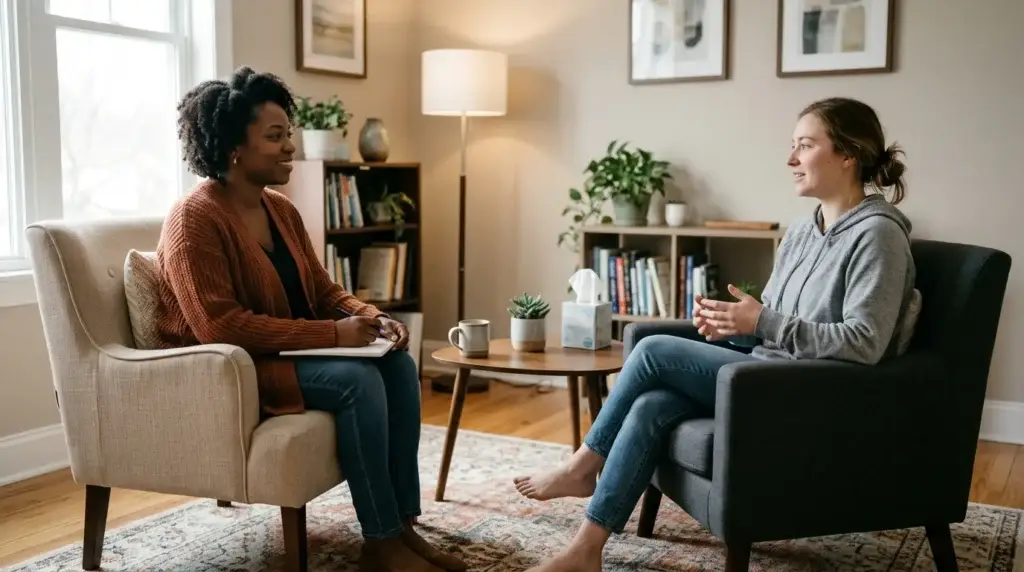
Recreate Ohio’s philosophy is anchored in the belief that each individual’s path through depression treatment is unique. Every individual’s mental health disgnosis is unique, which is why treatment plans are created together with the patient, ensuring an individualized approach to recovery that resonates with each patient’s specific needs. Medication management is an integral part of this process, offering stability to those that respond to medication. Many patients respond to antidepressants. SOme patients comein to treatment with current medication that needs to be adjusted, while others, try medication for the first time. Selective serotonin reuptake inhibitors (SSRIs), are the most commonly prescribed medication for depression.
What If Antidepressants Don't Work?
If antidepressants haven’t helped, depression can still be treated. The treatment plan needs to change, often by adjusting the medication, adding therapy, or moving to a more intensive level of care. Research on treatment-resistant depression shows that roughly one in three people don’t achieve full remission even after trying several different antidepressants, which is far more common than most assume and is not a reflection of personal failure.
Next Steps When Antidepressants Need Adjusting
Options at that point include switching to a different class of medication, combining medication with structured therapy like CBT or DBT, adjusting dosage under closer supervision, or pursuing a more intensive level of care such as residential treatment where medication management happens alongside daily clinical support. A diagnosis of treatment-resistant depression is a signal to escalate the plan.
Specialized Programs Addressing Diverse Needs
Confronting depression involves multiple fronts. Recreate Ohio acknowledges the inadequacy of a one-size-fits-all approach. Recreate Ohio offers specialized programs that cater to the diverse needs of its patients, ensuring that each person is met with equally unique strategies.
The center offers a range of programs, including:
- Alternative therapies that provide alternatives to those for whom traditional treatments have not worked
- Group therapy sessions that help build a sense of community and support
- Family therapy for addressing relational issues and improving communication among family members
- Individual therapy and counseling sessions that focus on individualized treatment plans
- Medication management services for those who may benefit from medication in addition to therapy
These specialized programs are the center’s commitment to personalized care, proof of its dedication to addressing all aspects of mental health. Whether it’s the unique struggles of postpartum depression or the complex rhythms of bipolar disorder, Recreate Ohio’s programs are designed to offer support, understanding, and effective treatment strategies that resonate with each patient’s specific needs.
What Are Some Effective Coping Mechanisms for Anxiety and Depression?

Coping tools don’t replace treatment, but they give you something to hold onto between sessions and in the moments treatment can’t reach. The ones with the strongest clinical backing include:
| Coping Mechanism | How It Helps |
|---|---|
| Grounding techniques (5-4-3-2-1 senses exercise) | Interrupts spiraling thoughts by anchoring attention to the present moment |
| Consistent sleep and wake times | Stabilizes mood-regulating brain chemistry disrupted by depression and anxiety |
| Movement or light exercise | Releases endorphins and reduces cortisol, even in short daily amounts |
| Journaling thought patterns | Helps identify the specific triggers and cycles CBT later targets directly |
| Limiting alcohol and substance use | Prevents the temporary relief from deepening the underlying mood disorder |
| Scheduled connection with others | Counteracts the isolation that both anxiety and depression tend to reinforce |
These tools work best alongside professional care. A therapist or clinical team can help you figure out which of these genuinely help your specific presentation versus which ones are just filling time.
Insurance May Cover All Costs
Recreate Behavioral Health of Ohio accepts most major health insurance benefits and works with insurance providers to help cover the costs of your addiction treatment. We believe that finances should not be a barrier to receiving the life-changing help you deserve, and we offer a seamless process for insurance verification.
- Confidential & Quick
- Professional Guidance
- No Commitment Required

Supporting Women with Postpartum Depression
For new mothers, the joyous occasion of childbirth can be overshadowed by the unexpected onset of postpartum depression. Recreate Ohio provides an embracing community through dedicated counseling, mothers can:
- Share their experiences without fear of judgment
- Receive professional facilitation and communal encouragement
- Find comfort and practical advice in a compassionate environment
This acknowledges the extensive impact of postpartum depression and provides a network of care that extends beyond the individual.
Approaches for Bipolar Disorder and Mood Disorders
With treating bipolar disorder and mood disorders, the need for treatment strategies and support cannot be overstated. Recreate Ohio understands that stability for those with a bipolar or mood disorder is often marked by the need for early recognition of mood episodes and a consistent support system to maintain routines and provide emotional backing.
An individualized treatment plan is key to successful treatment for all mental disorders and diagnosis’s. At Recreate Ohio, we treat the individual first with an accurate diagnosis and from there we work with them to find the right plan for a successful outcome.
Making the Decision to Seek Help
The decision to seek help for depression is a key moment in anyone’s life. It’s a choice that requires courage and the acknowledgment that one’s mental health is as critical as physical well-being. For those considering treatment, confidential assistance is readily available.
Taking that initial step is important, not just for the individual but for their loved ones as well.
What to Expect When You Contact Recreate Ohio
Upon making that initial contact with Recreate Behavioral Health of Ohio, individuals are met with a complete approach that sets the stage for a successful treatment process. The assessment process is thorough, asking about the patient’s symptoms, medical history, and unique personal circumstances. This important information paints a picture of the individual’s mental health market, enabling the creation of a personalized treatment plan that addresses their unique needs.
The dialogue that ensues during initial discussions not only informs the treatment plan but also offers the patient a glimpse into what lies ahead.
Why Choose Recreate Ohio for Depression Treatment?
Selecting a depression treatment center is a decision that has the potential to influence the course of one’s recovery process. Recreate Ohio stands out as an optimal choice due to:
- Its skilled team of mental health professionals
- Its individualized and complete treatment approach
- The active involvement of families in the recovery process
With the latest findings in neuroscience and psychology at their fingertips, the team at Recreate Ohio offers a depth of understanding and a breadth of treatment options that can make all the difference in the battle against depression.
The center’s commitment to treating each patient as a whole person, rather than a collection of symptoms, sets it apart from other depression treatment centers. Since earning its primary mental health license from the state of Ohio in May 2025, Recreate Ohio has been able to treat depression as a primary diagnosis, expanding care to people who need this level of support but don’t have a co-occurring substance use disorder. It’s a place where the benefits of treatment extend beyond the individual, reaching families and communities, and where each success story adds to the collective hope that depression, no matter how formidable, can be treated with compassion, expertise, and a deep understanding of the human spirit.
Can You Ever Fully Get Rid of Depression?
For some, depression resolves and doesn’t return. For others, it’s more accurate to describe depression as a condition that’s managed well rather than eliminated entirely, similar to other chronic health conditions that respond to ongoing care. Neither outcome is a failure. Both represent real recovery.
What treatment can promise is a clinical foundation: an accurate diagnosis, a plan built around the individual, and the tools (medication, therapy, lifestyle support) that make long stretches of stability possible. Some people need that foundation once. Others return to adjust it as life changes. At Recreate Ohio, a return to treatment after a period of stability is treated as exactly what ongoing mental health care is supposed to look like.
Summary
It’s evident that depression, with its complex symptoms and big impact, requires a treatment approach as complicated as the condition itself. Recreate Ohio exemplifies this approach, offering a hope and a complete pathway to recovery for those ready to face and deal with their depression. From individualized treatment plans to ongoing support and relapse prevention, Recreate Ohio is dedicated to guiding you or your loved one to finding the solution that works for them.
The willingness to overcome depression is a courageous act, one that is met with unwavering support at Recreate Ohio. With a compassionate team, depression treatment programs, and a commitment to long-term health, Recreate Ohio helps individuals to reclaim their lives.
If you or someone you love is ready to talk about depression treatment, reach out to our admissions team. You don’t have to have it all figured out first. You just have to make the call.
Frequently Asked Questions
The main difference between Major Depressive Disorder (MDD) and Persistent Depressive Disorder (PDD) is that MDD involves intense episodes of depression with a 2-month gap between them, while PDD requires a chronic state of depression lasting at least two years in adults. Both conditions affect neurotransmitters and brain structures, but they differ in duration and severity of symptoms.
Yes, Recreate Ohio offers complete treatment plans tailored to individuals with treatment-resistant depression, including medication management, therapy, and whole practices to address the unique challenges. This approach can be beneficial for those with treatment-resistant depression.
After completing treatment, Recreate Ohio supports your next step through continuing care planning, relapse prevention strategies, a coordinated transition to outpatient care with community partners, and peer support groups, to help you settle back into daily life. This complete approach aims to maintain recovery.
Recreate Ohio involves family members in the treatment process by actively engaging them in counseling sessions and education classes to create a supportive environment for the patient. This helps in ensuring a strong support system for the individual undergoing treatment.
Residential depression treatment typically lasts around 30 days, though the exact length depends on the severity of symptoms and how someone responds to their treatment plan. Many patients then step down into IOP or outpatient care, coordinated with Recreate Ohio’s community partners, for continued support as they return to daily life.
Yes. Therapy alone, particularly CBT or DBT, can be effective for mild to moderate depression, and some patients prefer to explore therapeutic approaches before considering medication. The right path depends on symptom severity and personal history, which is why an accurate diagnosis comes before any treatment plan is built.
No. Sadness is a temporary emotional response to a specific event or circumstance, while depression is a sustained clinical condition that affects sleep, appetite, energy, concentration, and the ability to function, often without a single identifiable cause. Depression persists even when circumstances improve, which is one of the clearest signs it has moved beyond ordinary sadness.
Supporting Articles
Dual Diagnosis Treatment: Learn how Recreate Ohio treats addiction and mental health conditions together as the integrated challenge they are.
Medical Detox: Understand what medically supervised detox looks like for those whose depression co-occurs with substance use.
Trauma Therapy in Ohio: Explore how trauma-informed care addresses the experiences that often underlie depression and anxiety.
PTSD Treatment: See how Recreate Ohio’s primary mental health license extends residential care to trauma-related conditions independent of addiction.