
You started using kratom to manage pain, ease anxiety, or get off opioids. That made sense at the time. But somewhere along the way, the kratom stopped being a solution and became a problem of its own — and now you’re wondering if what you’re experiencing is actually addiction. It is. And it’s treatable.
Kratom addiction treatment typically involves medically supervised detox to manage withdrawal symptoms, followed by residential or outpatient behavioral therapy — including CBT and dual diagnosis care — to address the underlying patterns driving use. With the right clinical support, people do recover from kratom dependence.
Kratom addiction doesn’t get the same attention as opioid or alcohol dependence, but for the people living with it, the struggle is just as real. At Recreate Behavioral Health of Ohio, our clinical team holds dual licensure from both the Joint Commission and the Ohio Department of Mental Health and Addiction Services — including a primary mental health license granted in May 2025 — meaning we treat the full picture of what’s driving substance use, not just the substance itself. Located on a serene campus in Gahanna, Ohio, just minutes from Columbus, we provide medical detox and residential treatment designed around you — your history, your mental health, your goals.
What Is Kratom and Why Does It Cause Dependence?
Kratom — derived from the Mitragyna speciosa tree native to Southeast Asia — has been marketed as everything from a natural pain reliever to an opioid withdrawal remedy. That last claim is especially important. Many people we see at our facility started using kratom precisely because they were trying to manage opioid dependence on their own. The problem? Kratom acts on the same opioid receptors in the brain that opioids do.
Here’s the thing: the “natural” label doesn’t make something non-addictive. Kratom’s active compounds — mitragynine and 7-hydroxymitragynine — bind to mu-opioid receptors, producing effects that feel familiar to anyone who has used opioids. At low doses, it’s stimulant-like. At higher doses, sedating and pain-relieving. And with repeated use, the brain adapts. It expects the kratom. When you stop, it makes that expectation known loudly.
That’s dependence. And dependence doesn’t respond to willpower — it responds to treatment.
How Kratom Use Can Escalate
What often starts as a few grams a day can escalate quickly (this is more common than most people realize). Tolerance builds, doses increase, and soon the kratom isn’t producing the same effect it once did — but stopping produces withdrawal that feels impossible to push through without help.
Some patterns that signal dependence:
- Needing kratom first thing in the morning to function
- Feeling anxious, irritable, or physically sick when you skip a dose
- Increasing your dose despite wanting to cut back
- Structuring your day around getting and using kratom
- Trying to quit multiple times and being unable to
Sound familiar? That’s not weakness. That’s what dependence does to the brain.
Kratom Withdrawal: What to Expect
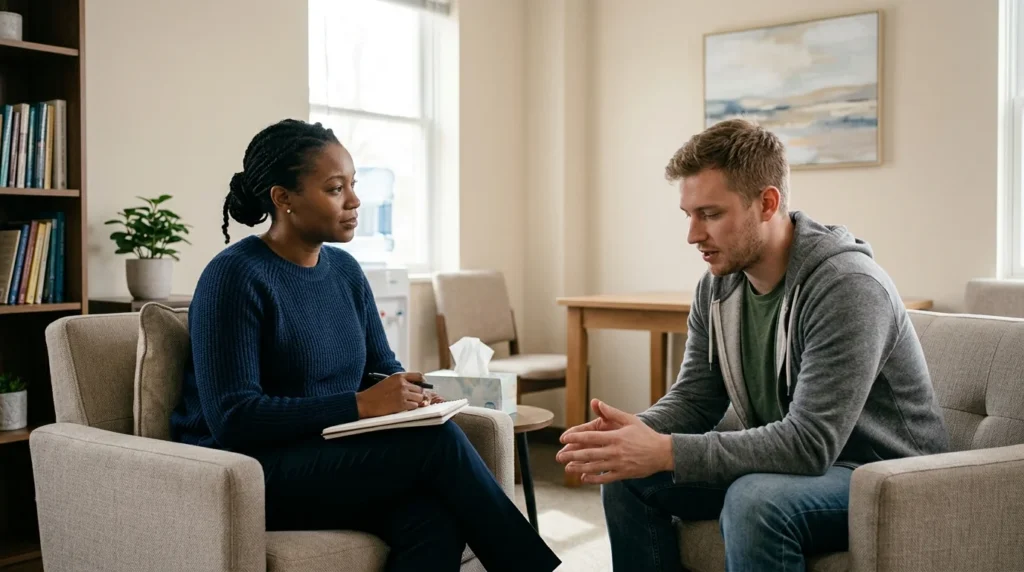
Kratom withdrawal doesn’t look exactly like opioid withdrawal — but it’s uncomfortable enough that most people can’t get through it alone. Because kratom acts on opioid receptors, the withdrawal syndrome shares features with opioid withdrawal, along with some unique characteristics.
Here’s what kratom withdrawal typically involves:
| Symptom | Onset | Duration |
|---|---|---|
| Muscle aches and pain | 12–24 hours after last dose | 5–10 days |
| Irritability and anxiety | 12–24 hours | 7–14 days |
| Nausea and vomiting | 24–48 hours | 3–7 days |
| Insomnia and restlessness | 24–48 hours | Up to 2 weeks |
| Depression and low mood | 48–72 hours | Several weeks |
| Cravings | Onset within 24 hours | Ongoing — addressable in treatment |
The timeline varies depending on how much someone was using, for how long, and whether any other substances were involved. What that table doesn’t capture is how disorienting the mood-related symptoms can be. The depression and anxiety that accompany kratom withdrawal aren’t just unpleasant — they can feel like they’re revealing something that was always there, just medicated away.
That’s why medical supervision matters.
Medical Detox for Kratom: Why You Shouldn’t Go It Alone
Kratom detox isn’t usually life-threatening the way alcohol detox can be — but it’s not something most people successfully complete without support. The combination of physical discomfort and psychological symptoms (particularly the anxiety and depression) creates a powerful pull back to use.
At Recreate Behavioral Health of Ohio, medically supervised detox includes:
- A comprehensive intake assessment — understanding your full substance use history, mental health history, and any co-occurring conditions before building your detox plan
- 24/7 medical monitoring — our clinical staff tracks your symptoms around the clock, adjusting your plan as withdrawal progresses
- Medication-assisted support — while there’s no FDA-approved medication specifically for kratom withdrawal, we use evidence-based medications to manage the specific symptoms you’re experiencing (anxiety, pain, insomnia, nausea)
- Emotional support from day one — detox isn’t just physical. Our team addresses the fear and discomfort that come with early withdrawal, so you’re not alone with what you’re feeling
The goal of detox isn’t just to get through withdrawal. It’s to stabilize you physically and mentally so you can engage fully in the therapeutic work that actually addresses why you were using in the first place.
Client Spotlight
Wade had been using kratom daily for nearly three years. He’d originally started using it to help taper off prescription opioids after a back injury — and for a while, it worked. But the dose kept climbing, and by the time he reached out to Recreate Behavioral Health of Ohio, he was taking 30 to 40 grams a day and hadn’t gone more than a few hours without it in months. “I didn’t think you could actually be addicted to it,” he said. “I thought it was helping me.” During detox, the team managed his anxiety and sleep disruption with targeted medications, and his counselor began helping him connect the dots between his chronic pain, his anxiety, and his use. Wade completed residential treatment and later described detox week as “brutal but doable because I wasn’t alone.”
Kratom Addiction and Mental Health: The Connection You Can’t Ignore
Here’s what the research is showing more clearly every year: most people using kratom chronically aren’t using it recreationally. They’re using it to manage something — pain, anxiety, depression, trauma, opioid withdrawal. That means when you take away the kratom, whatever it was managing doesn’t go away. It surfaces.
This is why dual diagnosis treatment isn’t optional in effective kratom addiction treatment. It’s the whole point.
Co-occurring disorders that commonly appear alongside kratom dependence include:
- Anxiety disorders — particularly generalized anxiety and social anxiety, which kratom temporarily quiets
- Depression — kratom’s mood-lifting effects are a powerful draw for people with untreated depression
- PTSD — the sedating, dissociative effects at higher doses can function as self-medication for trauma symptoms
- Opioid use disorder — many kratom-dependent individuals have prior opioid use history and tried to manage it on their own
- Chronic pain conditions — pain that went undertreated or untreated and led to self-management through kratom
Treating the addiction without treating the co-occurring condition is, frankly, incomplete care. The two are interwoven. That’s not a clinical footnote — it’s the reason so many people relapse after detox when they don’t receive integrated treatment.
Client Spotlight
For Priya’s husband, Simon, it was her call that started things. She’d watched him cycle through kratom use for two years, noticed his anxiety seemed to be getting worse rather than better, and finally reached out to Recreate Ohio’s admissions team looking for answers. The team walked her through what dual diagnosis treatment would mean for Simon — treating his kratom dependence alongside the anxiety disorder that had gone undiagnosed for years. When Simon finally entered treatment himself, the piece that surprised him most was how much of the work wasn’t about the kratom at all. “It was about everything underneath it,” he said. The structured residential environment gave him enough distance from daily stressors to actually do that work.
What Kratom Addiction Treatment Looks Like at Our Facility
After detox, the deeper work begins. Residential treatment at Recreate Behavioral Health of Ohio is structured and immersive — which is exactly what this stage of recovery requires.
So what does that actually look like day to day?
Evidence-Based Therapies
- Cognitive Behavioral Therapy (CBT) — helps you identify the thought patterns and behavioral cycles that sustained your kratom use, and build healthier responses. CBT is one of the most extensively researched treatments for both addiction and co-occurring mental health conditions.
- Dialectical Behavior Therapy (DBT) — particularly effective when emotional dysregulation or trauma is part of the picture. DBT teaches distress tolerance and emotion regulation skills that make the early months of recovery significantly more manageable.
- Motivational Interviewing (MI) — a collaborative approach that meets you where you are in your readiness to change, building internal motivation rather than relying on external pressure.
- Group therapy — connection with others in treatment is itself therapeutic. You’ll find that others understand this in ways most people in your life can’t.
- Individual counseling — one-on-one work with a licensed clinician who gets to know your specific history and goals.
- Family therapy — because your recovery doesn’t happen in isolation, and the people who love you deserve support too.
The Environment Matters
Our Gahanna campus — situated across from a municipal golf course and near the trails along Big Walnut Creek — provides genuine separation from the daily triggers and stressors that fuel use. That physical and psychological distance isn’t incidental. It’s part of the treatment.
What Comes After Residential Treatment
Recovery doesn’t end at discharge. Bottom line: the transition out of residential care is one of the most vulnerable moments in the entire process. We plan for it from the beginning.
Through community partnerships, Recreate Ohio coordinates step-down care into:
- Intensive Outpatient Programs (IOP) — structured programming several days a week, allowing you to return to daily life while maintaining clinical support
- Outpatient Programs (OP) — ongoing therapeutic connection as you rebuild your routines
- Community-based 12-step and peer support programs — the long-term relational foundation that sustains recovery when formal treatment ends
You won’t be discharged and left to figure it out alone.
How We Approach Kratom Addiction Treatment at Recreate Behavioral Health of Ohio
Licensed by the Ohio Department of Mental Health and Addiction Services and accredited by the Joint Commission, Recreate Behavioral Health of Ohio treats both addiction and mental health as the integrated conditions they are — because that’s what the clinical evidence supports, and because that’s what people actually need.
Our clinical team includes licensed counselors who have completed graduate-level training, with expertise in dual diagnosis care that makes us especially equipped for cases where kratom use is intertwined with anxiety, depression, PTSD, or opioid use disorder history. Every treatment plan is built around the individual — not a template.
We’re in-network with Cigna, Medical Mutual, Blue Cross Blue Shield, Tricare, and most major insurance carriers. Financial barriers shouldn’t stand between someone and the treatment they need — so our admissions team handles insurance verification directly, so you know what’s covered before you commit to anything.
Recreate Ohio is part of the Recreate Behavioral Health Network, a national network with programs across the eastern United States. That means the depth of clinical experience and the evidence-based standards we bring to Ohio come from a track record built across thousands of patients and multiple treatment facilities. National expertise. Local care.
Supporting Articles
- Addiction Treatment in Ohio — A broad overview of treatment options available across Ohio, including how to identify the right level of care for your situation.
- Opioid Addiction Treatment — Because kratom acts on opioid receptors, understanding how opioid use disorder develops and is treated offers directly relevant context for anyone dealing with kratom dependence.
- Dual Diagnosis Treatment Centers in Ohio — Explores how co-occurring addiction and mental health conditions are treated together — a central part of effective kratom addiction care.
- Residential Addiction Treatment Ohio — Details what daily life in residential treatment looks like, including what to expect during the structured programming phase after detox.
- Treatment for Prescription Drug Addiction — Many kratom-dependent individuals have prior prescription opioid histories; this article covers treatment approaches relevant to that overlap.
Frequently Asked Questions
Is Kratom Actually Addictive?
Yes. Kratom’s active compounds bind to opioid receptors in the brain, and with repeated use, the brain develops physical and psychological dependence. People who use kratom regularly often experience withdrawal symptoms when they stop — including anxiety, muscle pain, insomnia, and depression — which are hallmark signs of physical dependence.
Can You Detox from Kratom at Home?
While kratom withdrawal is rarely life-threatening, most people find it extremely difficult to complete without medical support — particularly because of the anxiety, depression, and insomnia that accompany it. Medically supervised detox significantly improves completion rates and manages symptoms safely, giving you the best foundation for continued treatment.
How Long Does Kratom Withdrawal Last?
Acute physical symptoms typically begin within 12–24 hours of the last dose and peak around days 2–3, with most physical symptoms resolving within 7–10 days. Psychological symptoms — particularly anxiety, depression, and cravings — can persist for several weeks and are best addressed through ongoing therapeutic treatment after detox.
Does Insurance Cover Kratom Addiction Treatment?
In most cases, yes. Kratom use disorder is treated under the umbrella of substance use disorders, which are covered under the Mental Health Parity and Addiction Equity Act. Recreate Behavioral Health of Ohio is in-network with Cigna, Medical Mutual, Blue Cross Blue Shield, Tricare, and most major carriers. Contact our admissions team directly for a free insurance verification.
What If I’m Using Kratom Because I Have Anxiety or Depression?
That’s one of the most common patterns we see. Kratom often masks an untreated or undertreated mental health condition — and when you stop using it, that condition surfaces. This is exactly why dual diagnosis treatment matters. At Recreate Behavioral Health of Ohio, we treat the mental health condition and the dependence together, because addressing one without the other leaves recovery incomplete.
How Is Kratom Treatment Different from Opioid Treatment?
Because kratom activates opioid receptors, there’s significant clinical overlap with opioid use disorder treatment. However, there are no FDA-approved medications specifically for kratom withdrawal, so treatment is symptom-focused during detox. The therapeutic components — CBT, DBT, dual diagnosis care, relapse prevention — are largely the same, and experienced dual diagnosis programs handle kratom-dependent patients effectively.
Do I Need Residential Treatment for Kratom Addiction, or Is Outpatient Enough?
It depends on the severity of your dependence, your mental health history, your home environment, and whether you’ve attempted to stop before. Many people with moderate-to-severe kratom dependence — especially those with co-occurring anxiety, depression, or opioid history — benefit most from the structure and immersion of residential treatment. Our admissions team can help you assess the right level of care for your specific situation.