



Your adult son won’t admit he has a problem, even though the pills, the missed work shifts, and the calls from strangers at 3 a.m. tell a different story. You’ve begged. You’ve cried. You’ve threatened. Nothing moves him. If you’re in Ohio and living through some version of that scene right now, you need to know that Ohio has its own legal path for getting a person into treatment even when they refuse to go voluntarily, and it doesn’t require them to break the law first.
Ohio’s version of Casey’s Law is codified in Ohio Revised Code Chapter 5119.94, often called the state’s substance use civil commitment statute. It allows a parent, relative, or legal guardian to petition a probate court for court-ordered treatment when a loved one’s substance use has become dangerous, and the person is either unwilling or unable to recognize their need for help.
Recreate Behavioral Health of Ohio works directly with families navigating this exact situation, because a court order for treatment only matters if there’s a real facility ready to receive that person and build a plan around them. We’re a Joint Commission accredited provider licensed by the Ohio Department of Mental Health and Addiction Services, offering medically supervised detox and residential treatment for adults 18 and older on our campus in Gahanna, near Columbus. Our clinicians regularly field calls from family members holding a court order in one hand and a phone number in the other, unsure of what happens next. We help fill in that gap, from insurance verification through the first days of care.
What Is Casey’s Law, and Why Does Ohio Have It?

Casey’s Law started outside Ohio, but the reasoning behind it now shapes Ohio’s own statute. The original law was named for Matthew Casey Wethington, a young man whose death from an overdose pushed his family to fight for a legal mechanism that didn’t previously exist, a way for loved ones to intervene before a person hit rock bottom or committed a crime.
Ohio adopted its own version through Ohio Revised Code Chapter 5119.94. It’s sometimes referred to informally as “Casey’s Law in Ohio,” even though the statute has its own name and structure distinct from the original Kentucky law. The core idea carries over directly.
Why does this matter? Addiction changes how the brain processes risk, consequence, and insight. Denial is often a symptom of the disease itself. A person can be actively dying from their addiction and still insist, with total sincerity, that they’re fine. Ohio’s law exists because waiting for someone to reach “rock bottom” on their own sometimes means waiting too long.
How Ohio’s Law Differs From the Original Casey’s Law
Ohio built its own eligibility standards, court procedures, and evidentiary requirements into Chapter 5119.94, distinct from the original statute. This is a quick side-by-side of the concepts most people confuse:
| Concept | What It Means in Ohio |
|---|---|
| Legal basis | Ohio Revised Code Chapter 5119.94 |
| Who can file | A parent, spouse, adult relative, or legal guardian |
| Who it applies to | An adult (18+) with a substance use disorder |
| Court type | Probate court in the relevant Ohio county |
| Standard of proof | Clear and convincing evidence of danger to self or others due to substance use |
| Outcome if granted | Court-ordered evaluation and/or treatment |
What matters is understanding the version that actually applies where the person lives, which for Ohio families is Chapter 5119.94.
How Does Casey’s Law Work in Ohio?
The process moves through the probate court in the county where the person lives, and it follows a specific sequence. It’s a legal proceeding with real steps, real evidence, and a real hearing.
- A concerned party files a petition. A parent, spouse, adult relative, or guardian submits a petition to the probate court explaining why treatment is needed and describing the specific behaviors and risks involved.
- The court reviews the petition. A judge determines whether there’s enough on paper to move forward, sometimes ordering an initial evaluation.
- A hearing is scheduled. The person named in the petition has the right to be present, to have legal representation, and to respond to the claims made against them.
- Evidence is presented. This typically includes documented patterns of substance use, prior treatment attempts, medical records, or testimony describing dangerous behavior.
- The court issues a ruling. If the judge finds clear and convincing evidence that the person’s substance use poses a danger to themselves or others, the court can order evaluation and treatment.
- Treatment placement begins. Once ordered, the family (often working with the court and a treatment provider) coordinates admission to a licensed facility.
Much of this hinges on documentation. Courts want specifics: dates, incidents, prior overdoses, missed obligations, statements from witnesses. Families who go into this process with a clear timeline of events tend to have a smoother experience than those who show up with only their fear and love, as real as those are.
Who Qualifies, and What Does Filing Actually Involve?
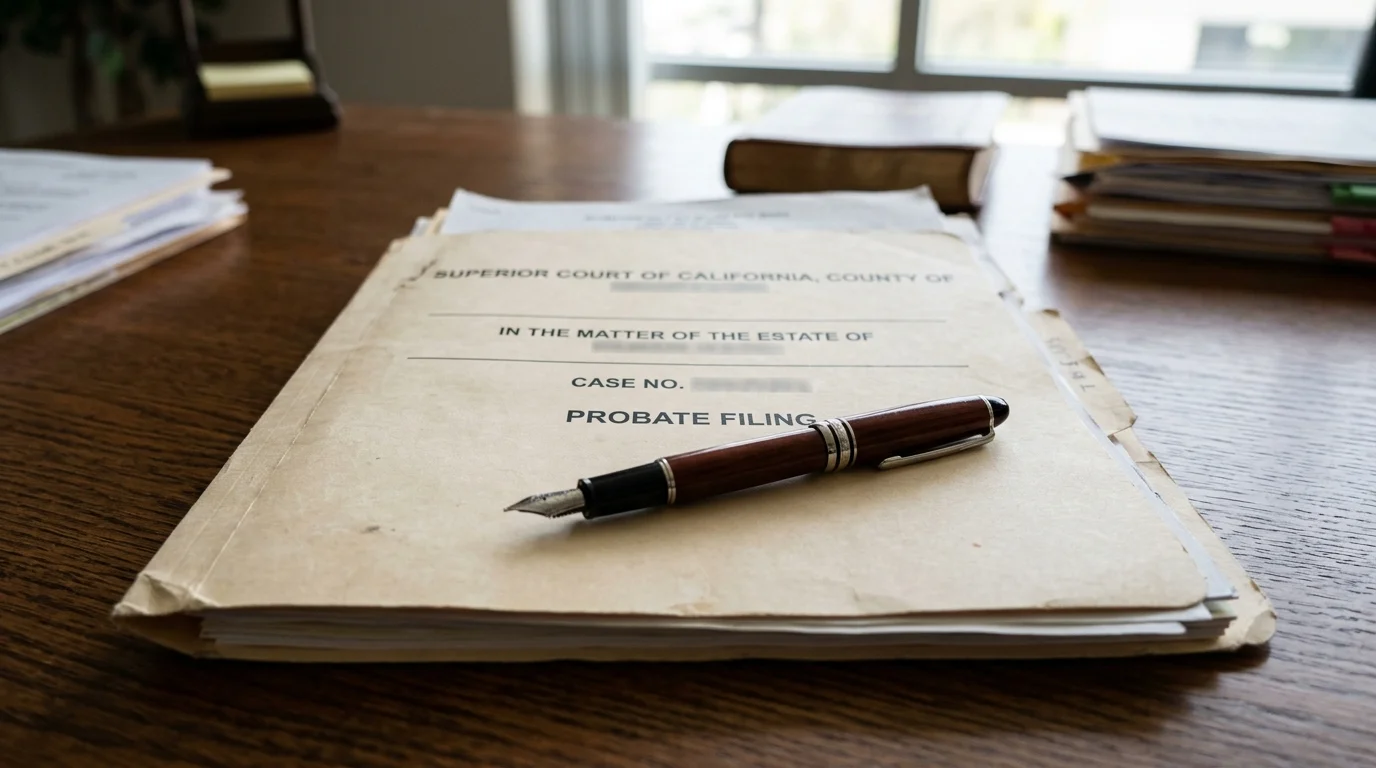
Ohio’s civil commitment statute is written for adults whose substance use has crossed into dangerous territory. Courts look for evidence that the person poses a real risk to themselves or someone else because of their substance use, and that less restrictive options haven’t worked or aren’t realistic given the circumstances.
What counts as “clear and convincing evidence” in practice? Judges generally want to see a documented pattern, not a single bad night. That might include:
- Prior overdoses or emergency room visits related to substance use
- A documented history of failed voluntary treatment attempts
- Evidence of self-neglect, such as inability to maintain basic safety or hygiene
- Threats or acts of violence connected to substance use
- Medical or psychiatric records showing the severity of the condition
Filing Steps in Ohio
If you’re the one considering this path, here’s what the practical side looks like:
- Contact the probate court in the county where your loved one resides to obtain petition forms and filing information.
- Gather documentation: incident reports, medical records, texts, or a written timeline of concerning events.
- Consider consulting an attorney familiar with Ohio civil commitment proceedings, since court requirements can be detailed.
- File the petition and prepare for the scheduled hearing.
- Identify a licensed treatment provider in advance, so there’s a clear place for your loved one to go if the court grants the order.
That last step trips families up more than any other. A court order without a treatment bed waiting on the other end just creates delay and frustration. Our team can verify insurance coverage and talk through admission logistics before a hearing even happens, so you’re not scrambling after the fact.
Client Spotlight
A woman named Renata reached out to us after filing a petition for her adult brother, whose opioid use had led to two overdoses in the same year. She’d never been inside a courtroom before and didn’t know what to expect from the hearing. While her petition worked through probate court, our team walked her through what residential detox would involve, what her brother’s insurance would cover, and what the first week of treatment typically looks like. When the court granted the order, she already had answers instead of more questions, which she later said made the hardest day of her life slightly less terrifying.
What About Cost, and Can Someone Really Be Forced Into Rehab?
Yes, a person can legally be required to enter treatment in Ohio without their consent, but only through this formal court process. Ohio requires the court to make that determination based on evidence, and the person has the right to a hearing and legal representation before that happens.
Cost is one of the most common questions families ask, and it’s a fair one. Filing fees for probate court petitions vary by county, and legal representation adds its own cost if a family chooses to hire an attorney, which many do given the complexity of the process. What we can speak to directly is the treatment side: once a court order is in place, our team works to verify insurance benefits so families understand what’s covered before admission. We accept coverage through Cigna, Medical Mutual, Blue Cross Blue Shield, Tricare, and most major carriers, and we handle that verification directly so the financial piece isn’t something you’re figuring out alone on top of everything else.
Ohio’s Baker Act Question, and Other Related Laws

A lot of Ohio families searching for this information also ask about the Baker Act. The Baker Act is a Florida statute for emergency psychiatric holds. Ohio has its own separate framework for mental health emergencies, generally handled through Ohio’s civil commitment statutes for mental illness (distinct from the substance use commitment law discussed here). If a person is in immediate psychiatric crisis, Ohio’s emergency hold provisions are what apply.
You may also come across references to “Tim’s Law” or “Seth’s Law” in searches related to this topic. These aren’t Ohio statutes. Ohio’s relevant law for court-ordered substance use treatment is Chapter 5119.94. If you’re unsure which law applies to your situation, an attorney or the probate court clerk in your county can point you toward the right statute rather than a name you saw referenced online.
How Recreate Behavioral Health of Ohio Supports Families Through This Process
We built our admissions process around families calling us mid-crisis, sometimes with a court order in hand and sometimes still deciding whether to file one, who need clear answers fast. Our clinical team has supported families at every stage of this process: before a petition is filed, during the waiting period for a hearing, and immediately after a court grants an order.
Recreate Ohio is licensed by the Ohio Department of Mental Health and Addiction Services and holds Joint Commission accreditation, standards that matter here because a court-ordered treatment placement has to go to a facility equipped to handle both the legal requirements and the clinical reality of what your loved one is facing. Many people who enter treatment through this kind of order also carry undiagnosed anxiety, depression, or trauma alongside their substance use. That’s part of why our approach treats addiction and co-occurring mental health conditions as one connected picture.
We’re also part of the Recreate Behavioral Health Network, which operates facilities across several states. That gives our clinicians access to clinical protocols and case consultation beyond what a single, standalone facility typically has, while our campus in Gahanna stays rooted in the Ohio community we actually serve. Families need us to know Ohio’s courts, Ohio’s insurance options, and Ohio’s treatment choices well enough to be useful on the worst day of their lives.
Supporting Articles
- How to Combat Addiction Practical guidance for recognizing addiction and understanding what treatment options exist beyond a court order.
- Supporting a Recovering Addict Guidance for family members figuring out how to help a loved one without enabling the addiction.
- What Is Enabling? A clear look at the line between supporting someone and unintentionally making their addiction worse.
- Medication Assisted Treatment Ohio Details on how MAT is used during detox and early recovery for opioid and alcohol use disorders.
- Inpatient Rehab Treatment in Ohio What residential treatment actually involves once someone is admitted, whether voluntarily or by court order.
Frequently Asked Questions
Ohio’s version of Casey’s Law, found in Ohio Revised Code Chapter 5119.94, lets a parent, relative, or guardian petition a probate court to order treatment for an adult whose substance use poses a danger to themselves or others, even without that person’s consent.
You’ll file a petition with the probate court in the county where your loved one lives, along with documentation showing the danger their substance use creates. The court schedules a hearing, and if the evidence meets the legal standard, a judge can order evaluation and treatment.
Yes, but only through the formal court process under Ohio Revised Code Chapter 5119.94. Families can’t require treatment on their own; a judge must review evidence and grant the order after a hearing where the person has the right to respond.
The original Casey’s Law was enacted in Kentucky, and several other states, including Ohio, have adopted their own similar civil commitment statutes for substance use treatment, each with its own name, procedures, and eligibility standards.
No. The Baker Act is a Florida law for emergency psychiatric holds. Ohio has separate statutes for mental health emergencies and for substance use civil commitment (Chapter 5119.94), and they aren’t interchangeable.
Filing fees vary by county probate court, and many families choose to hire an attorney given the complexity of the process, which adds additional cost. Our team can separately verify insurance coverage for the treatment side once a court order is in place.
Once the order is granted, the family works to place their loved one in a licensed treatment facility. Our team coordinates admission logistics and insurance verification so the transition into detox or residential care can move forward without unnecessary delay.